When you’re planning a cross-country trip in the US, you might wonder: Is Amtrak faster than a car? It sounds like a simple question, but the answer isn’t black and white. For some routes, the train wins by miles. For others, you’ll be stuck on the platform while your car pulls ahead. Let’s cut through the noise with real numbers, real routes, and real experiences.
How fast does Amtrak actually go?
Most Amtrak trains don’t break 110 mph. That’s not because they can’t - the Northeast Corridor has tracks built for 150 mph - but because 80% of Amtrak’s network shares rails with freight trains. That means delays aren’t rare. They’re built into the schedule.
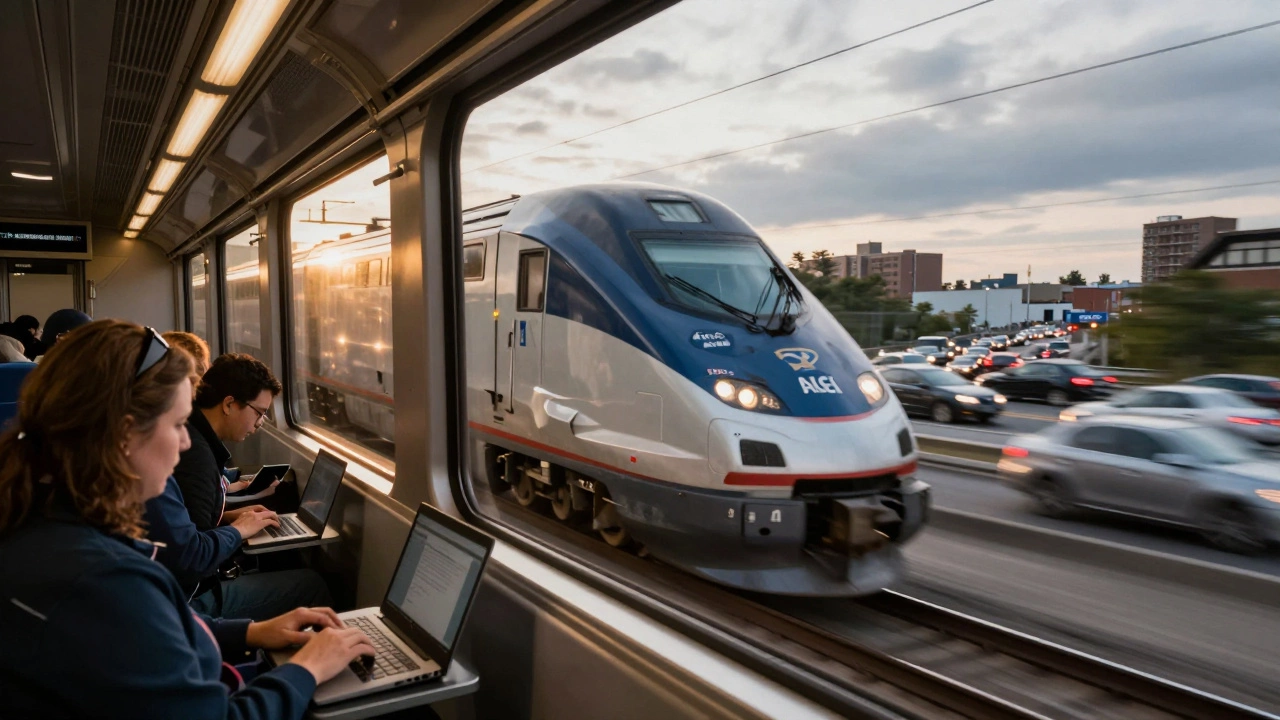
On the Acela, Amtrak’s high-speed service between Boston, New York, and Washington D.C., you’ll hit 150 mph in stretches. The trip from NYC to DC? About 3 hours. By car? With traffic, tolls, and gas stops, it’s closer to 4.5 hours. Here, the train wins.
But step outside the Northeast, and things change. Take the California Zephyr from Chicago to Emeryville (near San Francisco). The train covers 2,438 miles in about 51 hours. That’s an average speed of 48 mph. A car driving nonstop at 65 mph would cover the same distance in 37.5 hours. Even with two drivers, sleep breaks, and meals, you’re still likely to beat the train.
Why Amtrak feels slower than it is
Amtrak doesn’t run on a schedule. It runs on a priority list. Freight trains get preference. Delays of 2-6 hours are common on long-distance routes. I took the Sunset Limited from New Orleans to Los Angeles last fall. The train was scheduled to arrive at 9 a.m. It got in at 5:30 p.m. The conductor didn’t apologize. He just said, “The Santa Fe line was backed up with coal cars.”
Meanwhile, your car? You control the pace. You stop when you want. You skip a detour. You take the highway that’s clear. There’s no one else’s schedule holding you back.
When Amtrak beats the car
It’s not about raw speed. It’s about time you get back.
On the Northeast Corridor, you can work on your laptop, nap, read, or eat a real meal without worrying about traffic. That’s 3 hours of productive or relaxing time. In a car? You’re staring at brake lights, adjusting the AC, and trying not to fall asleep.
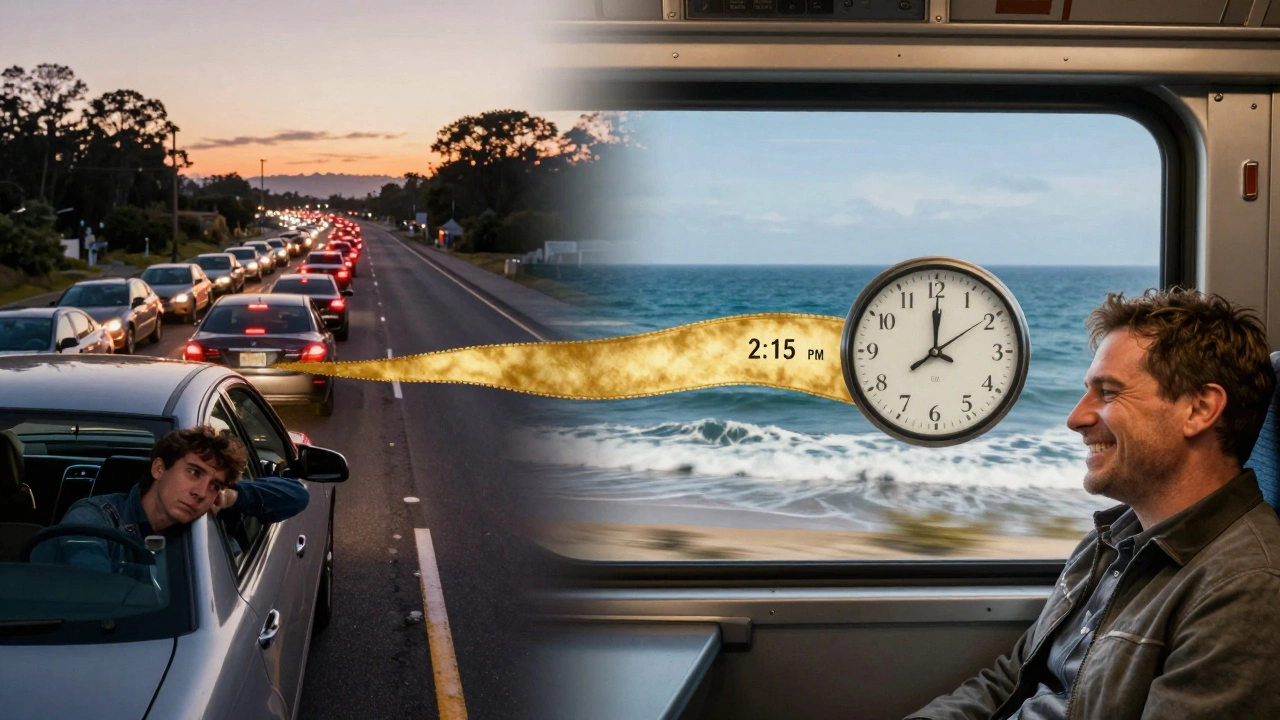
Same goes for the Pacific Surfliner along the California coast. You watch the ocean roll by. You don’t have to navigate the 101 during rush hour. You don’t pay $70 for parking in Santa Barbara. You don’t worry about a flat tire in the middle of nowhere.
For these routes - and a few others like the Empire Builder or the Crescent - Amtrak isn’t just competitive. It’s better.
When driving is the clear winner
If you’re going from Omaha to Denver (530 miles), Amtrak’s California Zephyr takes 12 hours. A car? 8 hours. With a few snack breaks and a gas stop, you’re still 2 hours ahead.
Or say you’re headed from Portland to Boise. Amtrak’s Empire Builder detours through Spokane - adding 200 miles and 6 hours. Driving straight? 6 hours. No detours. No waiting.
Long-distance Amtrak trains are designed for scenery, not speed. They’re meant for people who want to see the Rockies, the plains, the Mississippi. Not for commuters who need to get there fast.
The hidden costs of driving
People forget: driving isn’t free. Gas prices are up. Tolls add up. Parking in cities? $50 a day. Wear and tear on your car? $0.15 per mile on average. For a 1,000-mile trip? That’s $150 just in maintenance.
Amtrak tickets? A one-way from Seattle to Portland runs $45. From Chicago to St. Louis? $58. You’re not just paying for a seat. You’re paying for zero stress, zero navigation, zero parking tickets.
And if you’re traveling solo? A train ticket often costs less than gas alone. I checked last month: gas from Minneapolis to Milwaukee was $62. Amtrak? $39.
What about comfort and convenience?
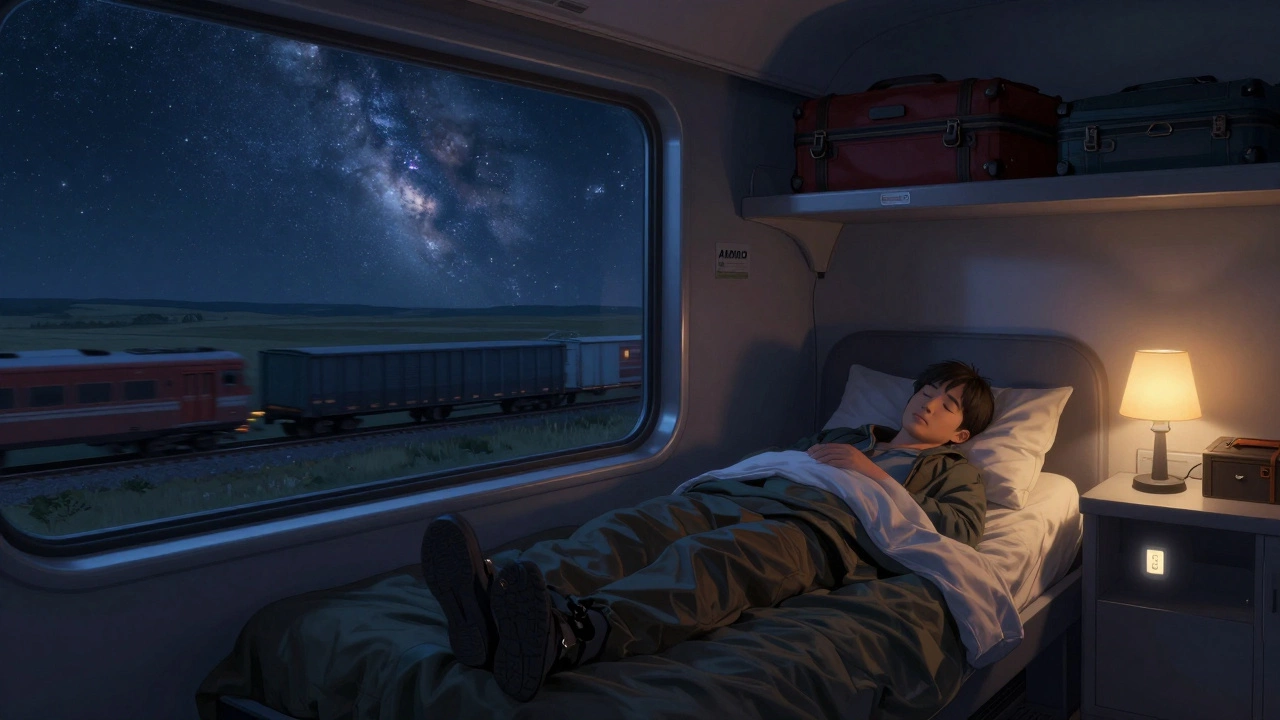
Amtrak’s Viewliner and Superliner cars have reclining seats, power outlets, free Wi-Fi, and dining cars. On long routes, you can upgrade to a roomette - a tiny private cabin with a bed. For $150 extra, you sleep through 18 hours of travel. No hotel. No check-in. No noise.
Try doing that in a car. You’d need a camper van. Or a sleep mask. Or a co-pilot who doesn’t snore.
And let’s not forget the bathrooms. Train bathrooms are clean. They’re stocked. They’re not in the middle of a highway rest stop with three other cars parked outside.
Real-world comparison: Three routes, three outcomes
| Route | Amtrak Time | Driving Time | Amtrak Wins? |
|---|---|---|---|
| New York to Washington D.C. | 3 hours | 4.5 hours | Yes |
| Chicago to St. Louis | 5.5 hours | 5 hours | No |
| San Diego to Los Angeles | 2.5 hours | 2 hours | Yes (traffic) |
Notice the third row? Driving is technically faster - but only if traffic is perfect. In reality, the Pacific Surfliner avoids the 405 bottleneck. You arrive on time. Every time.
Bottom line: It depends on where you’re going
Is Amtrak faster than a car? Sometimes. Often not. But it’s rarely worse.
If you’re on the Northeast Corridor, the California coast, or any route with dedicated passenger tracks - take the train. You’ll save time, money, and sanity.
If you’re crossing the Great Plains, the Rockies, or heading somewhere Amtrak doesn’t go directly - drive. You’ll get there quicker. And you’ll have more control.
But here’s the thing most people miss: Amtrak isn’t trying to beat your car. It’s trying to give you back your day. While you’re stuck in traffic, Amtrak lets you read, sleep, or watch the sunset roll over the Missouri River. That’s not about speed. It’s about space. And in a world that’s always rushing, that’s worth more than a few hours.
Is Amtrak really slower than driving?
It depends on the route. On the Northeast Corridor (NYC to DC, Boston to Philly), Amtrak is faster. On long-distance routes like Chicago to San Francisco, driving is quicker. But Amtrak avoids traffic, tolls, and parking - so even if it takes longer, it often feels faster because you’re not stressed.
Can you sleep on Amtrak?
Yes. Long-distance trains offer roomettes and bedrooms with beds, linens, and private bathrooms. A roomette costs about $150 extra, but it’s cheaper than a hotel and lets you arrive refreshed. No unpacking. No check-in. Just wake up at your destination.
Is Amtrak safe for solo travelers?
Yes. Amtrak has a strong safety record. Cars are monitored, staff are present, and you’re not alone in a rest stop at midnight. Solo travelers often find the train more secure than driving through remote areas, especially at night.
Do Amtrak trains have Wi-Fi and power outlets?
Most long-distance trains offer free Wi-Fi and power outlets at every seat. On the Northeast Corridor, Wi-Fi is reliable. On rural routes, it can be spotty - but outlets still work. You can charge your phone, laptop, or camera without hunting for a plug.
Why doesn’t Amtrak go faster?
Most Amtrak tracks are shared with freight trains, which have legal priority. Only the Northeast Corridor has dedicated passenger rails. Upgrading the rest would cost billions. Until then, delays are common - but so are scenic views, relaxed travel, and fewer headaches.