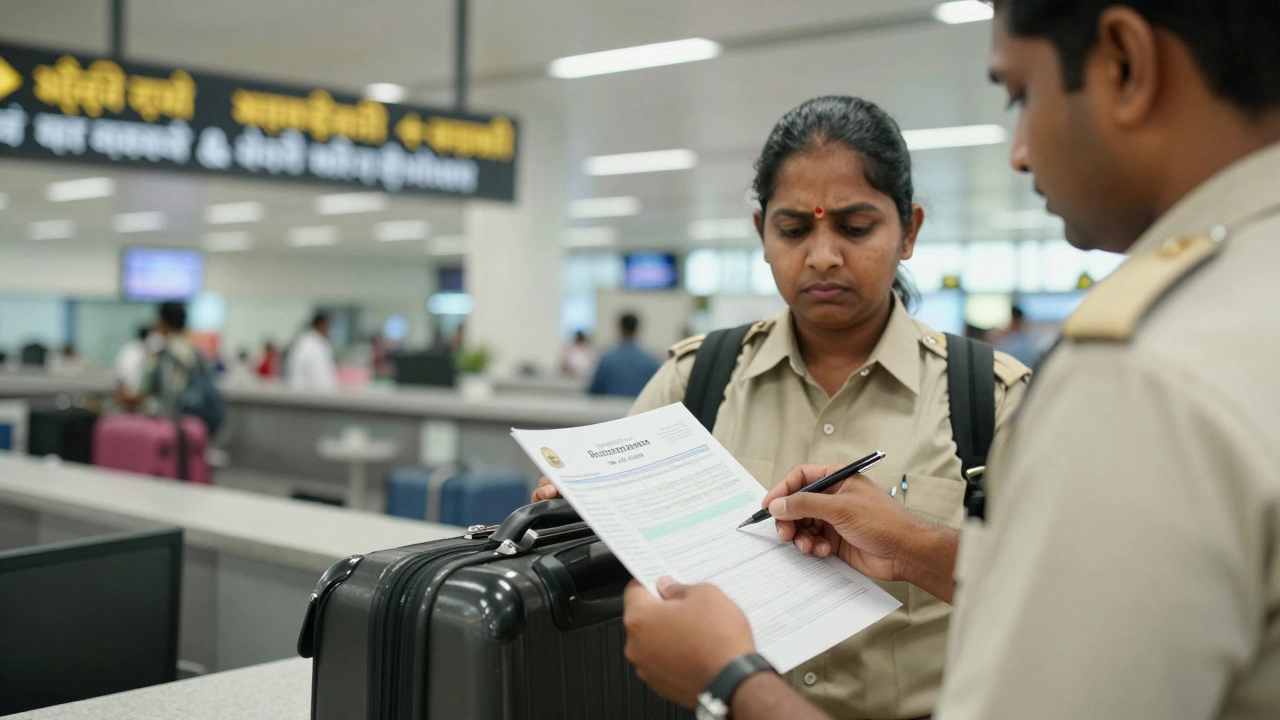
Cash Declaration Calculator for India
Check Your Cash Declaration Requirements
This tool helps you determine if you need to declare cash when traveling to or within India based on current regulations.
When you’re planning a budget trip to India, one of the first questions that pops up is: Can I carry cash? It’s not just about safety-it’s about legality. Many travelers assume that because India is cash-heavy, there are no limits. But that’s not true. The rules around carrying cash into, out of, or even within India are stricter than most people expect.
There’s No Ban on Carrying Cash-But There Are Rules
No, it’s not illegal to carry cash in India. You can walk into a temple in Varanasi with a wad of rupees in your pocket, or hop on a train to Rajasthan with a few thousand in your bag. But that doesn’t mean you’re free to carry any amount without consequences. The real issue isn’t ownership-it’s declaration.
India’s Foreign Exchange Management Act (FEMA) governs how much foreign currency you can bring in or take out. If you’re arriving from abroad, you must declare any cash over ₹50,000 in Indian rupees or $5,000 in foreign currency to customs. That includes notes, coins, traveler’s checks, or even prepaid forex cards. If you don’t declare it and get caught, you could face fines, confiscation, or even legal proceedings.
Domestic travel within India? No one checks your wallet at the airport or railway station. But if you’re moving large sums-say, over ₹2 lakh (₹200,000)-between cities and get stopped by tax authorities, you’ll need to explain where it came from. The Income Tax Department doesn’t care if you’re a tourist, but they do care if you’re moving money that looks suspicious.
Why Does India Care So Much About Cash?
India’s obsession with cash tracking isn’t about stopping tourists. It’s about fighting black money, tax evasion, and money laundering. After the 2016 demonetization, the government tightened rules across the board. Even though digital payments have grown, cash still makes up over 70% of transactions in rural areas. That makes it harder to track, and easier to abuse.
Think of it this way: if you’re carrying ₹5 lakh in cash from Delhi to Goa, and you can’t prove it came from your salary, savings, or a legal source, tax officials can ask you to justify it. They won’t arrest you on the spot-but they can freeze the money while they investigate. And that’s not something you want to deal with mid-trip.
What’s the Safe Amount to Carry?
For most budget travelers, the sweet spot is between ₹10,000 and ₹50,000. That’s enough to cover a week of hostels, local transport, street food, and small purchases without needing to rely on ATMs everywhere. You’ll find ATMs in cities and towns, but in remote areas like Ladakh or the Northeast, they’re scarce. Carrying too little means you’re stuck. Carrying too much means you’re asking for trouble.
Here’s a simple rule: if you’re carrying more than ₹50,000 in Indian rupees, keep a paper trail. A bank statement. A receipt from a forex counter. Even a screenshot of your online banking showing the withdrawal date. It’s not required, but it’s your best defense if someone asks.
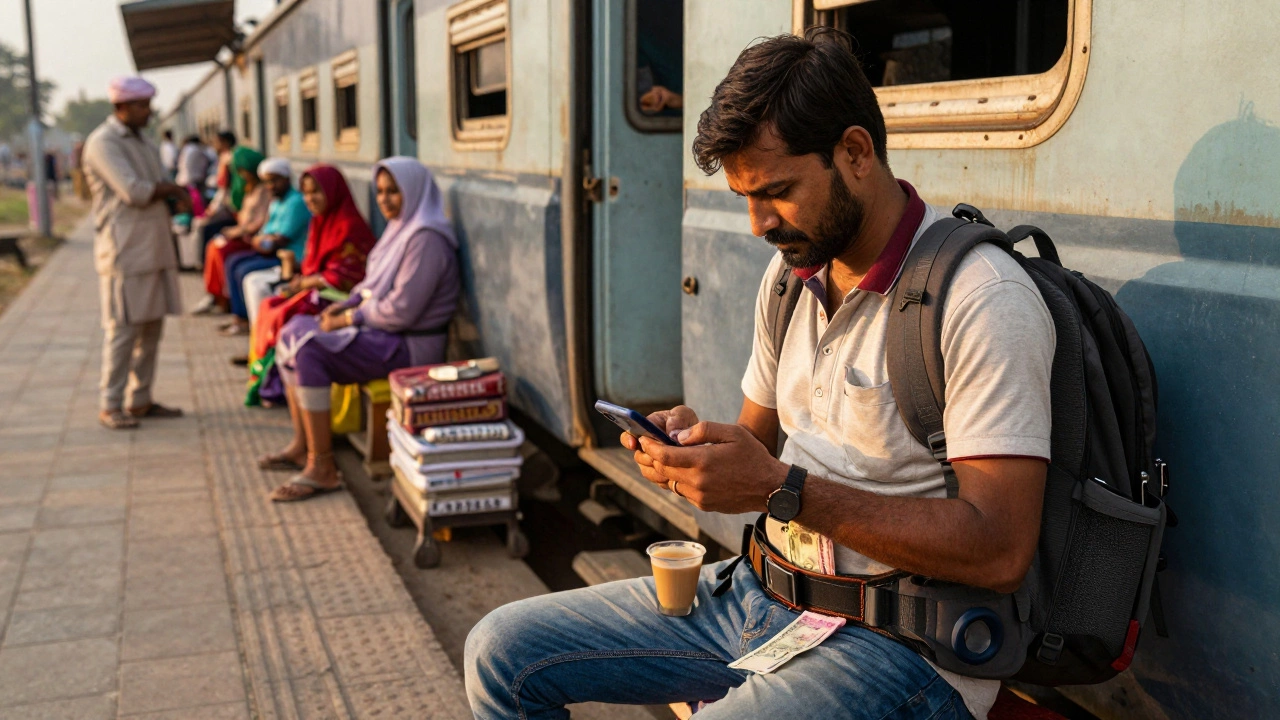
Foreign Currency: What You Can Bring In
If you’re flying into India from abroad, you can bring in any amount of foreign currency. But if it’s over $5,000 in notes or $10,000 total (notes + traveler’s checks), you must fill out a Currency Declaration Form at customs. This isn’t a tax form-it’s just a heads-up. The form is quick: name, passport number, amount, source.
Most travelers don’t need to declare if they’re carrying $2,000-$3,000. That’s enough to exchange at the airport or use at ATMs. But if you’re bringing in $10,000 in cash because you’re buying a scooter or paying for a private tour, you’re asking for scrutiny. Better to wire it, use a forex card, or exchange it at a bank.
Pro tip: Don’t carry large foreign notes like $500 or $1,000 bills. Indian banks and exchange counters often refuse them. Stick to $100 or lower. They’re easier to break, and easier to get accepted.
What Happens If You Get Caught?
Getting caught carrying undeclared cash doesn’t mean jail. But it does mean delays. Customs officials can seize your money if you didn’t declare it. They’ll give you a receipt, and you’ll have to go through a bureaucratic process to get it back-sometimes taking weeks. And if they suspect illegal activity (like drug money or hawala transactions), they can refer your case to the Enforcement Directorate. That’s when lawyers get involved.
Domestically, if tax officers stop you and ask for proof of income, and you can’t provide it, they can freeze the amount and impose a penalty of up to 10% of the unexplained cash. That’s not a fine-it’s a legal demand. And if you refuse to pay, they can take legal action.

What Should You Do Instead?
Here’s what smart budget travelers do:
- Carry ₹20,000-₹50,000 in Indian rupees for emergencies and small purchases.
- Use a forex card loaded with USD or EUR for ATM withdrawals. It’s safer than cash and has better exchange rates.
- Keep your foreign currency receipts and bank statements in your phone or email.
- Never carry more than ₹1 lakh in cash unless you have proof of its source.
- Use digital wallets like Paytm or PhonePe for small payments-they’re accepted everywhere now.
ATMs in India accept international cards (Visa, Mastercard), and most charge around ₹200-₹300 per withdrawal. It’s cheaper than exchanging cash at the airport, and you avoid the risk of carrying too much.
Myth Busting: Cash Isn’t King Anymore
Yes, India still uses cash. But the game has changed. In 2026, over 85% of urban transactions are digital. Even street vendors in Jaipur or Mumbai accept UPI payments. You don’t need to carry huge amounts of cash anymore. A smartphone with a good data plan and a forex card is more powerful than a wallet full of rupees.
And if you’re worried about connectivity? Carry a small amount of cash for markets, temples, or rural transport. But keep it under ₹50,000. That’s the line most travelers can safely cross without fear.
Final Rule: Declare What You Can’t Explain
If you’re unsure whether you should declare cash, just declare it. Customs officers aren’t out to trap tourists. They’re just doing their job. A simple declaration form takes five minutes. Skipping it could cost you hours-or worse.
Travel smart. Carry enough to be comfortable. But don’t carry more than you need. And always, always keep proof. In India, cash isn’t illegal-but unexplained cash is.