Angkor Wat Hindu Temple: History, Culture, and Travel Insights
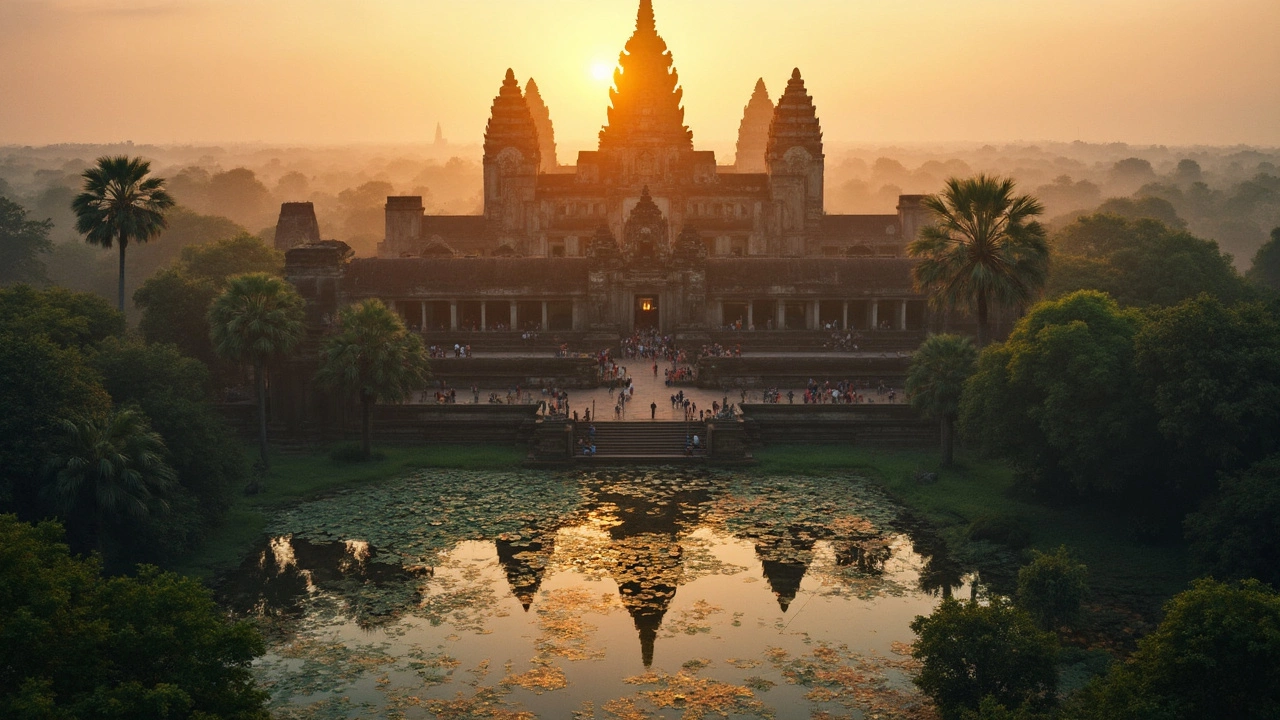
When you think of Angkor Wat, a massive 12th-century temple complex in Cambodia originally built as a Hindu shrine to Vishnu. Also known as Angkor Vat, it’s not just a ruin—it’s a living symbol of how religion, power, and art shaped Southeast Asia. What most people don’t realize is that Angkor Wat started as a Hindu temple, a grand monument dedicated to the god Vishnu during the Khmer Empire, long before it became a Buddhist site. This shift didn’t erase its Hindu roots—it layered them. The bas-reliefs still show scenes from the Mahabharata and Ramayana. The five towers? They represent Mount Meru, the center of the Hindu universe. You’re standing in a place where priests once chanted Vedic hymns, and kings offered gold to the gods.
Angkor Wat didn’t exist in isolation. It was part of a vast empire that stretched across modern-day Cambodia, Thailand, Laos, and parts of Vietnam. Its architecture blends Hindu-Buddhist heritage, a unique fusion of Indian religious traditions with local Khmer styles, creating something no other culture produced. Nearby temples like Bayon and Ta Prohm show how Buddhism slowly took over, but Angkor Wat kept its Hindu soul. Even today, monks chant Buddhist sutras under carvings of Hindu gods. That’s the magic—it’s not one religion replacing another. It’s both coexisting, side by side, for nearly a thousand years.
Why does this matter to travelers? Because visiting Angkor Wat isn’t just about checking off a UNESCO site. It’s about understanding how faith moves through time, how empires rise and adapt, and how a single stone structure can hold layers of meaning. You’ll see tourists in flip-flops taking selfies, but if you look closer, you’ll notice local families leaving flower offerings at the same altars their ancestors used. This isn’t a museum. It’s a spiritual landscape still breathing.
And if you’ve read posts about Hindu temple etiquette in India, you’ll notice something: the rules are similar. Remove your shoes. Dress modestly. Don’t point your feet at sacred images. These aren’t random traditions—they’re shared across the region, passed down through centuries of worship. Angkor Wat connects you to that deeper thread of South Asian spirituality, even if you’re standing in Cambodia, not India.
Below, you’ll find real travel stories, cultural insights, and practical tips from people who’ve walked these ancient corridors. Whether you’re planning a trip or just curious about how a Hindu temple ended up in the heart of Cambodia, the posts here give you the full picture—not just the postcards.