Hindu Temple Etiquette: What to Know Before You Visit
When you step into a Hindu temple, a sacred space for worship, ritual, and community in Hindu tradition. Also known as a mandir, it’s not just a building—it’s a living center of faith where millions connect with the divine every day. Whether you’re a tourist, a pilgrim, or just curious, knowing the basics of Hindu temple etiquette isn’t about following rules for the sake of it. It’s about showing respect where it’s deeply felt.
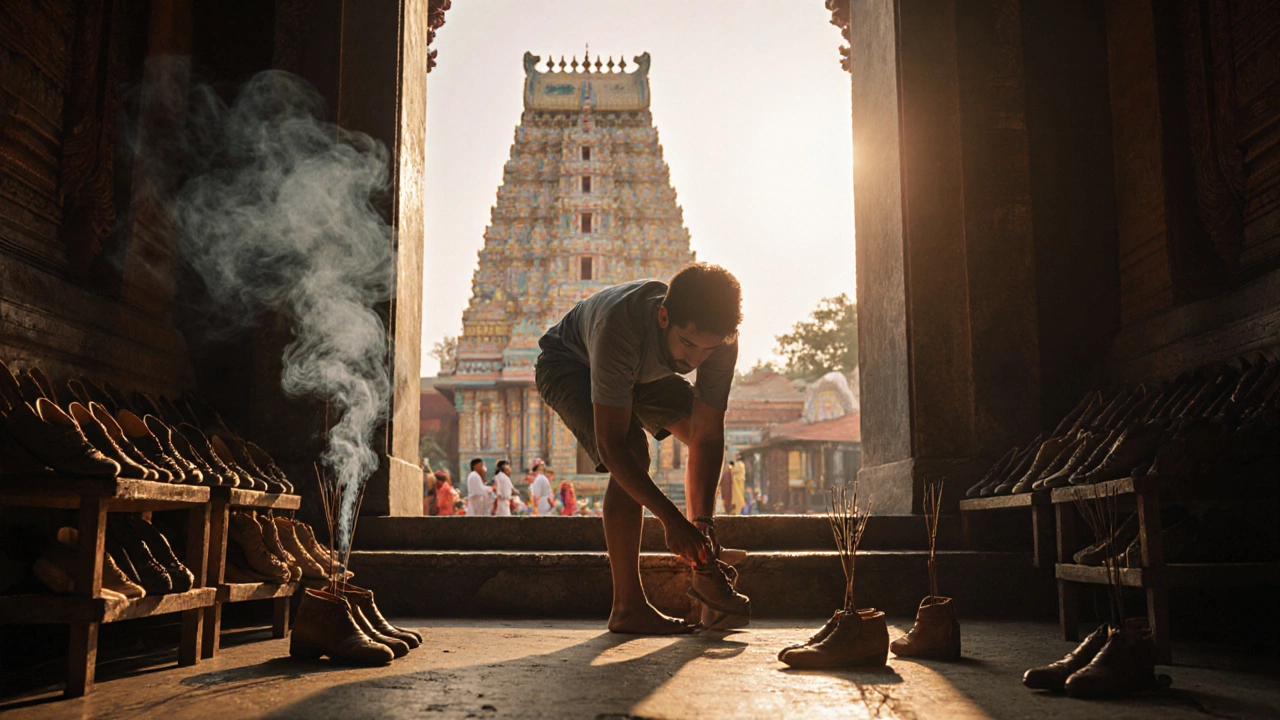
Most temples require you to remove your shoes before entering. It’s not just tradition—it’s practical. The floors are often clean, sometimes washed daily with milk or water, and walking barefoot connects you physically to the sacred ground. You’ll see racks outside every temple, filled with sandals and slippers. Don’t assume it’s optional. In many places, guards will gently but firmly stop you if you try to walk in with shoes on. What you wear matters too. Shoulders and knees should be covered. Women often wear sarees or long skirts, men wear dhotis or long pants. Shorts, tank tops, and revealing clothes are rarely allowed. This isn’t about modesty for modesty’s sake—it’s about recognizing the temple as a place of devotion, not a tourist photo op.
Inside, silence is expected. Talking loudly, laughing, or using your phone is seen as disrespectful. Many temples have a strict no-photography rule, especially near the main shrine. If you’re unsure, watch what others do—or ask quietly. Don’t point your feet at the deity. In Hindu culture, feet are considered the lowest part of the body, and pointing them toward a god or guru is rude. Sit cross-legged or kneel when praying. If you’re offered prasad (blessed food), receive it with both hands. Don’t refuse it unless you have a strong dietary reason—it’s a gift, not just a snack. And never touch the deity’s idol unless you’re a priest. Even well-meaning tourists sometimes reach out to ‘touch the blessing,’ but that’s not how it works.
There are also differences between temples. A small village temple in Tamil Nadu might have fewer rules than a massive one in Varanasi or Tirupati. Some temples only allow Hindus inside—this isn’t discrimination, it’s about preserving ritual purity. Others welcome everyone, but still expect the same level of respect. If you’re visiting during a festival like Kumbh Mela or Rath Yatra, expect crowds, noise, and chaos—but even then, the core rules stay the same. You’re a guest in someone else’s sacred space.
What you’ll find in the posts below are real stories and practical guides from travelers who’ve been there. Some learned the hard way. Others got it right from the start. You’ll read about what to wear in Kerala’s temples versus Ladakh’s hidden shrines, how to behave during morning aarti, and why some temples don’t allow foreigners past the outer courtyard. You’ll also find out where temple rules are flexible—and where they’re not. This isn’t about fear or restriction. It’s about showing up the right way so you can truly feel the peace, the power, and the beauty of these places.