Train Toilet Technology Explorer
Discover what happens to train waste: Select a scenario below to learn about the technology used in different types of trains, how they handle waste, and why these systems matter for hygiene and the environment.
Legacy Open Chute
The old way (pre-2000s)Bio-Toilet System
Microbial breakdown technologyVacuum Flush
Luxury & high-speed standardOpen Chute System (Legacy)
Phased OutHow It Worked
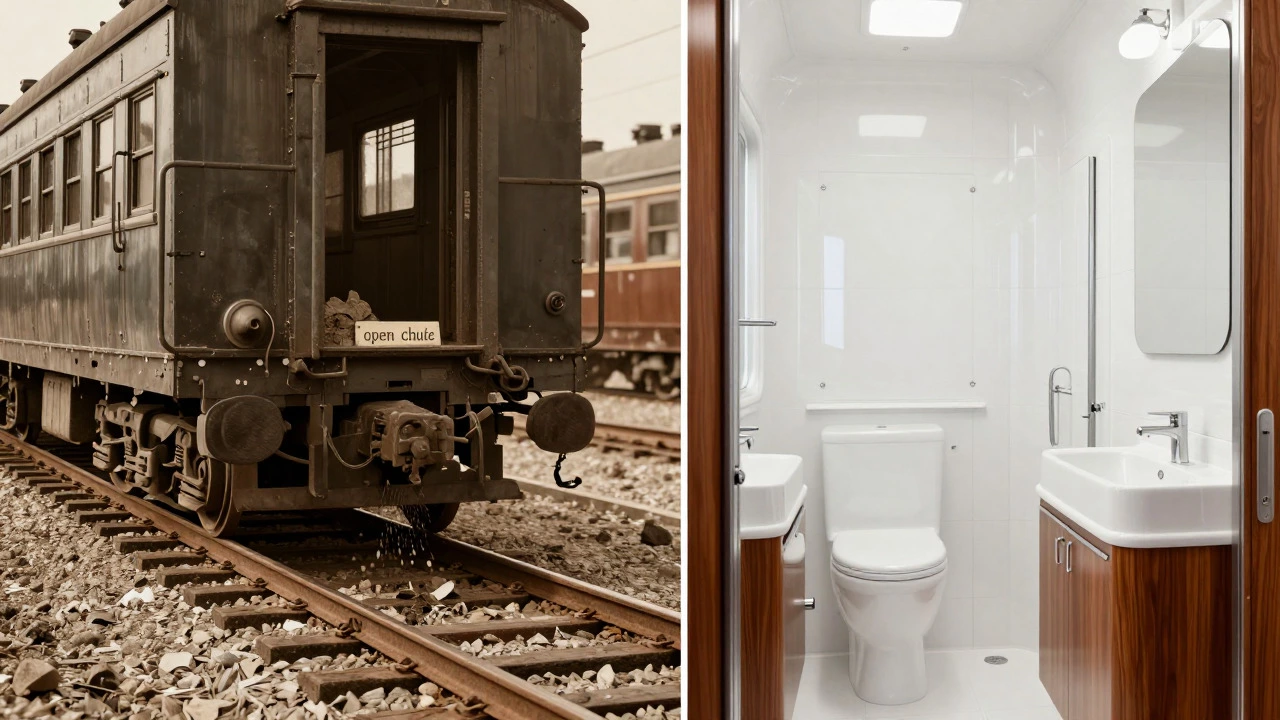
Waste dropped directly through a hole in the carriage floor onto the tracks below. No tanks, no treatment – just gravity doing its work.
The Reality
- Tracks covered in human excrement for hundreds of kilometers
- Unbearable smells near stations and crossings
- High disease transmission risk
- Manual track cleaning by workers without protection
- Zero maintenance cost while moving
Water Usage Per Flush
Historical Context
Used for nearly a century across most global rail networks. In India alone, this system left an estimated 100+ km of track contaminated daily before the Bio-Toilet initiative began in the early 2000s.
Why It Was Replaced
- Environmental crisis
- Public health hazards
- Worker safety concerns
- Pressure from NGOs and health organizations
Bio-Toilet System
Standard on Indian RailwaysHow It Works
Waste is collected in sealed underground tanks beneath carriages containing anaerobic bacteria that break down organic matter into methane gas and harmless slurry.
Key Features
- Neutralizes odors through bacterial action
- Reduces waste volume significantly
- Methane vented safely through pipes
- Liquid discharged only at designated stations
- Requires bacterial culture monitoring
Water Usage Per Flush
The Science Behind It
Anaerobic microorganisms thrive without oxygen, breaking down waste in stages:
- Hydrolysis: Complex molecules broken down
- Acidogenesis: Organic acids produced
- Methanogenesis: Methane gas released
Limitations
- Sensitive to extreme temperatures
- Disrupted by non-biodegradable items
- Requires regular bacterial replenishment
- Slower breakdown than vacuum systems
Vacuum Flush System
Gold Standard for LuxuryHow It Works
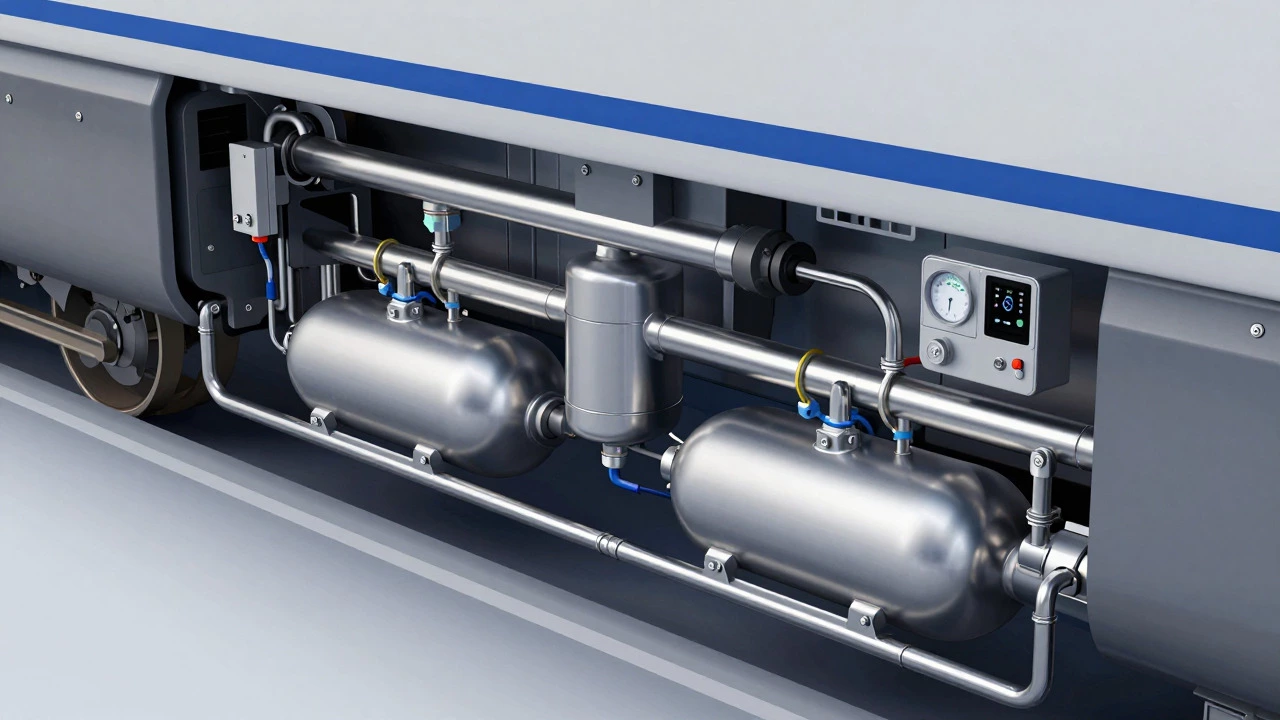
A powerful vacuum pump creates negative pressure in the waste pipe. When you press flush, air rushes out, pulling waste rapidly into a sealed holding tank under the floor – similar to commercial airplanes.
Premium Features
- Hermetically sealed – completely odorless
- Uses up to 90% less water than gravity flushes
- Silent operation with instant flush
- No direct contact with outside environment
- Standard on new coaches by Alstom & Bombardier
Water Usage Per Flush
Where You'll Find It
This technology powers the most prestigious train services worldwide:
- Rajdhani Express (India)
- Palace on Wheels
- Deccan Odyssey
- Maharajas' Express
- International luxury liners
- High-speed rail networks
Emptying Process
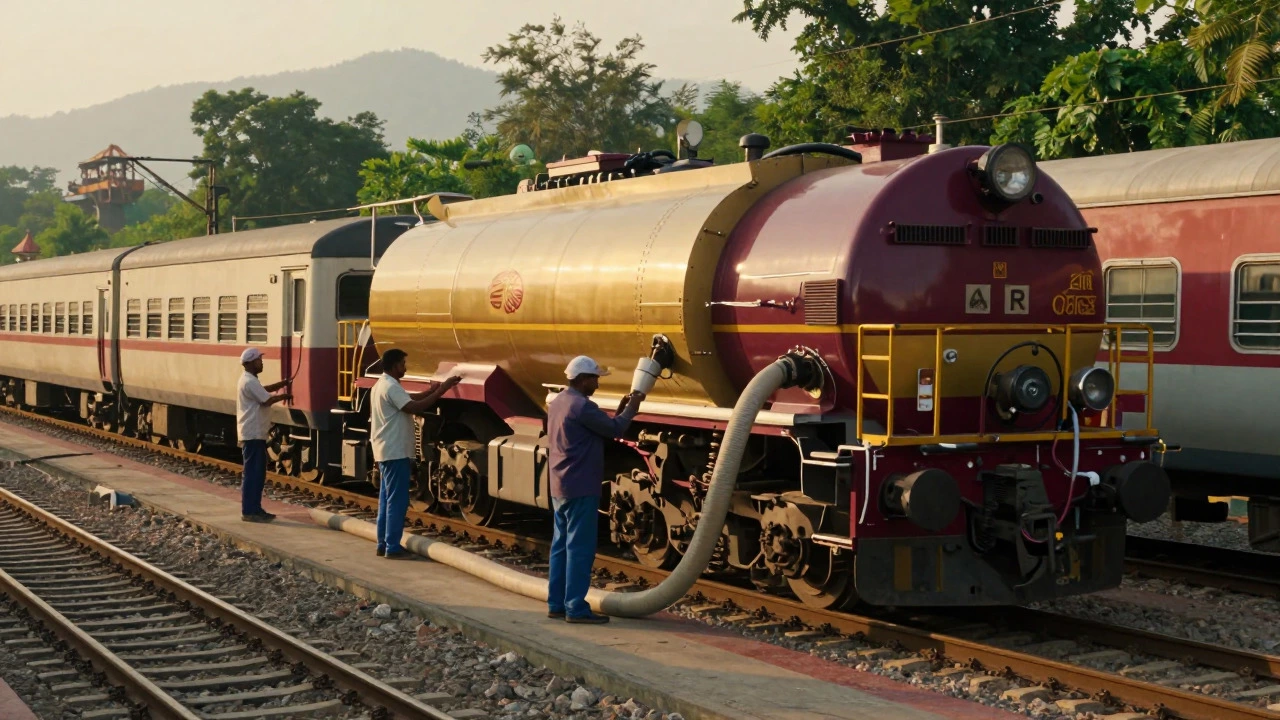
At major terminals, specialized vacuum trucks connect to waste outlet ports, emptying tanks in 15-20 minutes per coach before transporting contents to municipal sewage plants.
Technology Comparison
| Feature | Open Chute | Bio-Toilet | Vacuum Flush |
|---|---|---|---|
| Waste Disposal | Directly onto tracks | Sealed tank with bacterial breakdown | Sealed holding tank via suction |
| Odor Control | Poor (strong smells) | Good (neutralized by microbes) | Excellent (hermetic seal) |
| Water Usage | High (~10L/flush) | Moderate (~5L/flush) | Very Low (<0.5L/flush) |
| Maintenance | Track cleaning crews | Bacterial culture monitoring | Pump and valve servicing |
| Common On | Older regional trains | Standard Indian Railways | Luxury & High-speed rail |
💡Traveler Tip
Always dispose of sanitary products, wet wipes, and tissues in the provided wastebasket – never flush them! Even if it looks like a normal toilet, the plumbing is highly sensitive and can be easily clogged.
You step into the pristine bathroom of a luxury train, such as the Palace on Wheels or Deccan Odyssey, expecting nothing less than five-star comfort. But have you ever paused to wonder where that waste actually goes? For decades, the answer was simple and messy: straight onto the tracks. Today, the story is far more complex, involving high-tech vacuum systems, sealed holding tanks, and strict environmental regulations. Understanding this hidden infrastructure changes how you view your journey from a mere ride to a marvel of modern engineering.
The transition from open-chute defecation to closed-loop sanitation is one of the most significant upgrades in rail history. It’s not just about hygiene; it’s about protecting ecosystems and ensuring that the scenic routes we love remain pristine. If you are planning a trip on India’s famous luxury circuits, knowing how these systems work can alleviate common anxieties and enhance your appreciation for the service.
The Old Way: Why Tracks Were Once Covered in Waste
To understand the current state of train toilets, we must first look at the past. For nearly a century, most trains used a gravity-based system known as an "open chute." When you flushed, waste dropped directly through a hole in the floor of the carriage, landing on the rails below. This method was cheap and required no maintenance while the train was moving, but it created a massive public health and environmental crisis.
In countries with dense rail networks like India, this practice left hundreds of kilometers of track covered in human excrement. The smell was unbearable near stations, and the risk of disease transmission was high. Workers had to clean the tracks manually, often without adequate protection. By the early 2000s, pressure from environmental groups and health organizations forced a change. The Indian Railways launched the "Bio-Toilet" initiative, aiming to replace these archaic systems with scientifically designed alternatives.
Bio-Toilets: The Microbial Revolution
The first major shift came with the introduction of bio-toilets. Unlike open chutes, bio-toilets collect waste in sealed underground tanks located beneath the train carriages. These tanks contain specific anaerobic bacteria-microorganisms that thrive without oxygen. As waste enters the tank, these bacteria break down organic matter into methane gas and harmless slurry.
This process serves two critical functions. First, it neutralizes odors, which was a constant complaint on older trains. Second, it reduces the volume of waste significantly. The methane produced is vented safely through pipes, while the remaining liquid is discharged only when the train reaches a designated station equipped with collection facilities. This ensures that waste doesn’t litter the countryside between stops. However, bio-toilets have limitations. They require regular monitoring of bacterial cultures and can struggle with extreme temperatures or if non-biodegradable items (like sanitary products) are flushed, which disrupts the microbial balance.
Vacuum Flush Systems: The Gold Standard for Luxury
If you are traveling on premium services like the Rajdhani Express or international luxury liners, you are likely using a vacuum flush system. This technology mirrors what you find on commercial airplanes. Instead of relying on gravity or water pressure alone, a powerful vacuum pump creates negative pressure in the waste pipe. When you press the flush button, air rushes out, pulling waste rapidly into a sealed holding tank located under the floor.
The advantages of vacuum systems are clear. They use up to 90% less water than traditional gravity flushes, making them eco-friendly. More importantly, they are completely odorless because the system remains hermetically sealed until the tank is emptied at a depot. There is no direct contact with the outside environment during transit. For luxury travelers, this means a silent, efficient, and hygienic experience. The pumps are quiet, and the flush feels instantaneous. This system is now standard on new coaches built by manufacturers like Alstom and Bombardier for global rail operators.
| Feature | Open Chute (Legacy) | Bio-Toilet | Vacuum Flush |
|---|---|---|---|
| Waste Disposal | Directly onto tracks | Sealed tank with bacterial breakdown | Sealed holding tank via suction |
| Odor Control | Poor (strong smells) | Good (neutralized by microbes) | Excellent (hermetic seal) |
| Water Usage | High | Moderate | Very Low (< 0.5 liters per flush) |
| Maintenance Needs | Track cleaning crews | Bacterial culture monitoring | Pump and valve servicing |
| Common On | Older regional trains | Standard Indian Railways coaches | Luxury trains & High-speed rail |
Emptying the Tanks: The Logistics Behind the Scenes
A common misconception is that trains carry their waste indefinitely. In reality, holding tanks have limited capacity. For long-distance luxury journeys, such as the 7-day Maharajas' Express, the logistics of emptying these tanks are meticulously planned. At major terminals, specialized vacuum trucks connect to the train’s waste outlet ports. These trucks suck out the contents of the holding tanks and transport them to municipal sewage treatment plants.
This process happens quickly, usually within 15-20 minutes per coach, ensuring minimal disruption to the schedule. The trucks themselves are equipped with filtration systems to prevent spills and odors during transfer. In some advanced depots, the waste is pre-treated before entering the main sewer line to reduce the load on city infrastructure. This behind-the-scenes coordination is vital. If a tank fills up mid-journey, the train could face delays or, in rare cases, emergency diversions to the nearest siding with pumping capabilities.
Challenges and Future Innovations
Despite technological advances, challenges remain. One issue is passenger behavior. Many travelers still treat train toilets like home bathrooms, flushing wipes, cotton pads, or sanitary products. In vacuum systems, these items can clog the narrow intake pipes, causing blockages that require manual intervention. Rail operators increasingly place signs reminding passengers to dispose of such items in bins, but compliance varies.
Another challenge is the cost of retrofitting older fleets. While new luxury trains come equipped with state-of-the-art vacuum systems, upgrading vintage carriages is expensive and technically difficult due to space constraints. Some heritage trains retain older systems but operate on shorter routes to mitigate waste accumulation risks.
Looking ahead, the industry is exploring composting toilets for remote areas where access to sewage treatment is limited. These systems dehydrate waste into usable fertilizer, closing the loop entirely. Additionally, sensors are being integrated into tanks to monitor fill levels in real-time, allowing dispatchers to optimize emptying schedules dynamically. As sustainability becomes a core value in tourism, expect even greener solutions to emerge, further reducing the ecological footprint of rail travel.
Tips for Travelers Using Train Toilets
To ensure a smooth experience, keep these practical tips in mind:
- Use the bin: Always throw sanitary products, wet wipes, and tissues in the provided wastebasket, not the bowl. Even if it looks like a normal toilet, the plumbing is sensitive.
- Report issues early: If you notice a leak, strange noise, or weak flush, inform the attendant immediately. Small problems can become big ones if ignored.
- Check availability: On luxury trains, bathrooms are en-suite, so this isn’t an issue. However, on shared facilities, peak times (early morning and after meals) can mean waits.
- Carry essentials: While luxury trains provide toiletries, carrying hand sanitizer and small packets of tissues is wise, especially if you’re transferring between different classes or trains.
Do luxury trains dump waste on the tracks?
No, modern luxury trains do not dump waste on the tracks. They use sealed holding tanks with either bio-toilet or vacuum flush systems. Waste is collected at stations by specialized trucks and taken to sewage treatment plants.
How often are train toilets emptied?
Toilets are emptied whenever the train reaches a major terminal or depot equipped with vacuum pumping facilities. For long journeys, this may happen every 4-6 hours or at scheduled stops, depending on tank capacity and usage.
Can I flush sanitary products in a luxury train toilet?
It is highly recommended not to flush sanitary products, wet wipes, or cotton pads. These items can clog the sensitive vacuum or bio-systems. Always use the designated trash bin provided in the bathroom.
Are train toilets safe during motion?
Yes, they are designed to be stable. The seats are securely bolted, and the vacuum systems operate independently of the train's movement. However, it is advisable to hold onto the side handles during sharp turns or rough terrain for personal safety.
What happens if a toilet breaks down mid-journey?
Trains carry spare parts and tools for minor repairs. Attendants can often fix clogs or sensor issues on the spot. If a major failure occurs, the train may divert to the nearest siding for temporary bypassing of the affected unit, though this is rare on well-maintained luxury services.