Mini Vacation Success Estimator
Use this tool to check if your planned escape is structured correctly for maximum relaxation. Enter your trip details below.
Trip Details
Enter your details and click "Estimate" to see your predicted relaxation score.
You’ve got two days off work. Maybe three if you’re lucky enough to snag a long weekend. You’re tired of the same four walls, but booking a fortnight in Bali feels like too much planning and way too much money. So what do you do? You book a mini vacation. It’s not just a fancy term for "staying home." It’s a deliberate, structured escape that lasts anywhere from 24 hours to five days, designed to reset your brain without wrecking your bank account or your annual leave balance.
Think of it as the espresso shot of travel. You don’t get the full caffeine high of a two-week holiday, but you get enough energy to function for weeks afterward. The concept has exploded recently because modern life is fast, burnout is real, and waiting six months for a proper holiday just isn’t working anymore. But here’s the catch: most people ruin their mini vacations by trying to cram too much into them. They treat a 48-hour window like a 10-day expedition. That’s a recipe for stress, not relaxation.
The anatomy of a perfect short break
A mini vacation is defined by its constraints. Unlike a standard holiday where you might have ten days to wander aimlessly, a short break forces you to be intentional. You can’t see everything. You shouldn’t try to. The core definition revolves around time efficiency and mental detachment. If you’re checking emails every hour, you haven’t taken a mini vacation; you’ve just changed your office location.
According to travel psychology, the "anticipation effect" peaks about seven days before a trip. This means you can feel better about your life simply by having a small trip on the horizon. You don’t need a grand tour of Europe to trigger this dopamine hit. A train ride to a nearby coastal town works just as well. The key is separation. You need to physically move away from your routine environment to signal to your brain that it’s time to switch modes.
Here is how a typical mini vacation breaks down compared to a standard holiday:
| Feature | Mini Vacation (2-5 Days) | Standard Holiday (7+ Days) |
|---|---|---|
| Preparation Time | Minimal (Pack one bag, book one thing) | High (Visas, extensive itineraries, multiple bookings) |
| Cost Structure | Lower upfront cost, higher daily rate potential | Higher total cost, lower daily average possible |
| Mental Impact | Rapid decompression, prevents burnout | Deep immersion, significant perspective shift |
| Itinerary Style | Focused (One main activity + rest) | Exploratory (Multiple locations/activities) |
| Recovery Needed | Zero to minimal | Often requires a "re-entry" day |
Why short breaks are better than no breaks
Let’s address the elephant in the room: isn’t it a waste of money to travel for just two days? Not if you look at the return on investment for your mental health. Chronic stress accumulates. By the time you take a two-week holiday, you’re often so depleted that you spend the first three days just catching up on sleep. You’re running on empty before you even start exploring. A mini vacation acts as a pressure valve. It releases the steam before the boiler explodes. Studies on workplace productivity consistently show that frequent, shorter breaks maintain higher focus levels than rare, long absences. When you come back from a Friday-to-Sunday trip, you don’t need a recovery day. You’re actually energized. You’ve slept in, maybe done one fun activity, and eaten some good food. That’s enough to carry you through another month of grind.
Consider the financial angle too. While per-night costs for hotels can be higher for short stays, the total outlay is significantly lower. You aren’t paying for two weeks of meals, transport, and accommodation. You can afford to splurge slightly on your experience-maybe a nicer hotel or a guided tour-because the duration is short. This allows for a "luxury lite" experience that might be unaffordable over a longer period.

How to plan a mini vacation without the stress
The biggest mistake people make with short trips is over-planning. If you schedule hourly activities, you’re turning your relaxation into a job. Here is a simple framework to keep things manageable.
- Choose proximity over novelty: Pick a destination within a 3-hour travel radius. If you spend four hours traveling each way, you’ve lost half your vacation to logistics. Look for places accessible by car, train, or short flight.
- Pick one anchor activity: Decide on one thing you really want to do. Maybe it’s hiking a specific trail, visiting a museum, or just sitting by a pool. Build the rest of the time around this single event. Everything else is optional.
- Book flexible accommodation: Use platforms that allow free cancellation. Life happens. If you get sick or work calls an emergency, you don’t want to lose money. Also, look for places with kitchenettes if you want to save on dining out.
- Leave space for doing nothing: Schedule at least one block of time (two hours minimum) where you have zero plans. Read a book, nap, stare at the ocean. This is where the actual restoration happens.
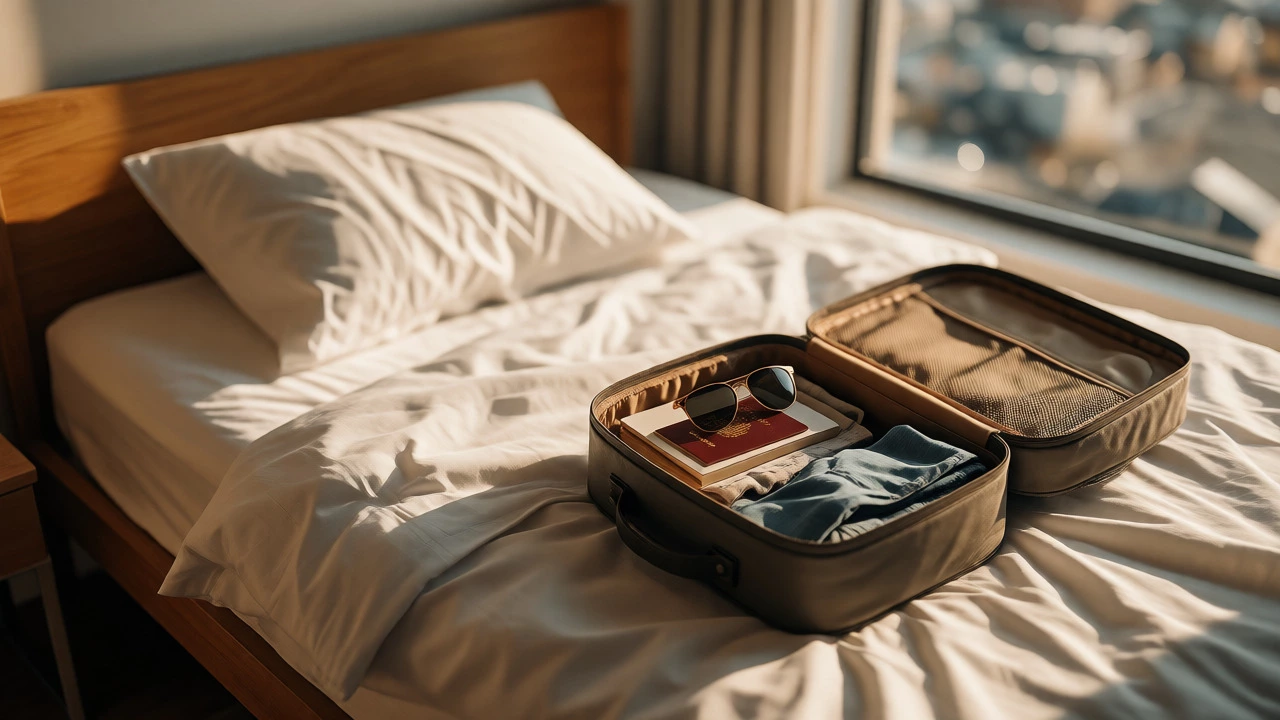
Don’t forget the packing rule. One bag only. If you can’t fit it all in a backpack or a small carry-on, you’re bringing too much stuff. Hauling heavy luggage ruins the vibe of a quick trip. Keep it light, keep it simple.
Where to go for a quick escape
You don’t need to fly internationally. In fact, staying local often provides a deeper sense of discovery. We tend to ignore our own backyards. Think about regions within driving distance that offer a change of scenery. Coastal towns are popular for a reason-the sound of waves lowers cortisol levels naturally. But consider other options:
- Hill Stations: Cooler air and mountain views provide an immediate psychological break from urban heat and noise.
- Cultural Hubs: Nearby cities with distinct art scenes, historical sites, or culinary traditions. You can eat your way through a new culture in 48 hours.
- Nature Reserves: Camping or glamping sites near forests or lakes. Disconnecting from Wi-Fi is easier when there is no signal.
If you live in a city like Sydney, Melbourne, or London, the "staycation" upgrade is also valid. Book a high-end hotel in your own city. Use the concierge. Order room service. Visit a neighborhood you rarely go to. It sounds counterintuitive, but treating your own city as a tourist destination can reframe your relationship with it. You stop seeing it as a place of work and traffic, and start seeing it as a place of leisure.

Common pitfalls to avoid
Even with the best intentions, mini vacations can go wrong. Here are the traps to watch out for.
The FOMO Trap: Fear Of Missing Out makes you try to see too many landmarks. You end up rushing from point A to point B, taking photos, but never actually experiencing the moment. Remember, you can always come back. Or you can choose something different next time. Quality beats quantity.
The Work Creep: Checking Slack or email "just quickly" destroys the boundary. Turn off notifications. Tell colleagues you are offline. If you must check, set a strict limit-say, 10 minutes once a day-and stick to it.
The Budget Blindspot: Small expenses add up fast over a few days. Taxis, tips, and impulse buys can double your estimated cost. Set a daily spending cap before you leave. Use cash if it helps you track physical spending better than digital wallets.
The Packing Panic: Don’t pack for every possible weather scenario. Check the forecast. Pack layers, not outfits. You will likely wear the same comfortable clothes twice. No one cares.
Making the most of your time off
To truly benefit from a mini vacation, you need to manage the transition. Start the trip early. Leave on Thursday evening instead of Friday morning. This gives you a full Friday to relax rather than wasting it in transit. Similarly, return late Sunday night or Monday morning. Avoid the Sunday afternoon rush if possible, as it kills the mood.
Document your trip lightly. Take a few photos, but don’t obsess over capturing content for social media. The goal is memory formation, not Instagram likes. Write down one thing you enjoyed each day. This practice reinforces positive memories and makes the break feel more substantial in retrospect.
Finally, integrate the lessons back into your life. Did you realize you loved walking by the water? Try to walk by the river after work once a week. Did you enjoy cooking a meal together without distractions? Schedule a phone-free dinner at home. Carry the habits, not just the souvenirs.
How long should a mini vacation last?
Typically between 2 to 5 days. Anything less than 2 nights often feels rushed due to travel time. Anything more than 5 days starts requiring more complex planning and may encroach on regular annual leave allocations, depending on your work policy.
Is a staycation considered a mini vacation?
Yes, if treated correctly. A staycation becomes a mini vacation when you actively break your routine. Staying home and doing chores does not count. Booking a hotel, exploring new neighborhoods, and disconnecting from work responsibilities qualifies it as a genuine break.
Do I need to use annual leave for a mini vacation?
Not necessarily. Many people use public holidays combined with weekends to create a long weekend. However, taking one or two personal days can extend a weekend into a 4-day break, which is often more relaxing than a packed 3-day itinerary.
What is the best destination for a first-time mini vacation?
Choose a place within 2-3 hours of travel time. Proximity reduces stress. Popular choices include nearby beach towns, national parks, or culturally rich cities you haven't visited yet. Avoid destinations that require flights unless the airport is very close to your home.
How do I budget for a short trip?
Allocate funds primarily to accommodation and one special activity. Save on food by choosing accommodations with breakfast included or kitchen facilities. Limit expensive dinners to one night. Always add a 10-15% buffer for unexpected costs like fuel or last-minute changes.