Trek Selector: Find the Best Route for You
Step 1: Plan Your Adventure
Select your preferences above to see the best trekking matches available in India for that period.
When you ask about the most visited tourist location in India, the immediate answer most travel agencies give is the Taj Mahal. Millions flock to Agra every year to see the marble mausoleum. However, that statistic doesn't tell the whole story for those craving adventure. For hikers and outdoor lovers, "location" implies rugged terrain and altitude rather than palace gates.
If we narrow the scope to adventure tourism within the country, the numbers shift dramatically. While the Taj Mahal holds the crown for general sightseeing, the landscape changes when you talk about active travel. As we move through late March 2026, the winter treks are winding down and the summer routes are opening up. This timing highlights why certain trails get more footfall than others depending on the calendar.
The Reality of Tourist Numbers in Adventure Zones
Differentiating between passive sightseeing and active exploration is key to understanding where the real action is. Traditional metrics often exclude off-road experiences because tracking visitors in remote valleys is harder than counting tickets at a museum. Yet, specific trails have developed such an infrastructure that they rival major cities in crowd density during peak seasons.
For instance, in recent years, social media influence has transformed hidden alpine routes into viral hotspots. A path that once saw a handful of local porters now sees hundreds of tourists from Delhi, Mumbai, and even international borders arriving in weekend batches. This surge isn't just anecdotal; trekking companies report booking caps months in advance for the most famous routes, indicating a demand that far outstrips the carrying capacity of some fragile ecosystems.
Top Contenders for the Most Popular Trails
To find the equivalent of the "Taj Mahal" in the hiking world, we look at volume and accessibility. You need a destination that is reachable by road or train, has basic camping facilities, and offers a reward worth the effort. Based on current registration data and operator feedback for the 2025-2026 season, three locations consistently lead the pack.
Kedarkantha: The Winter Champion
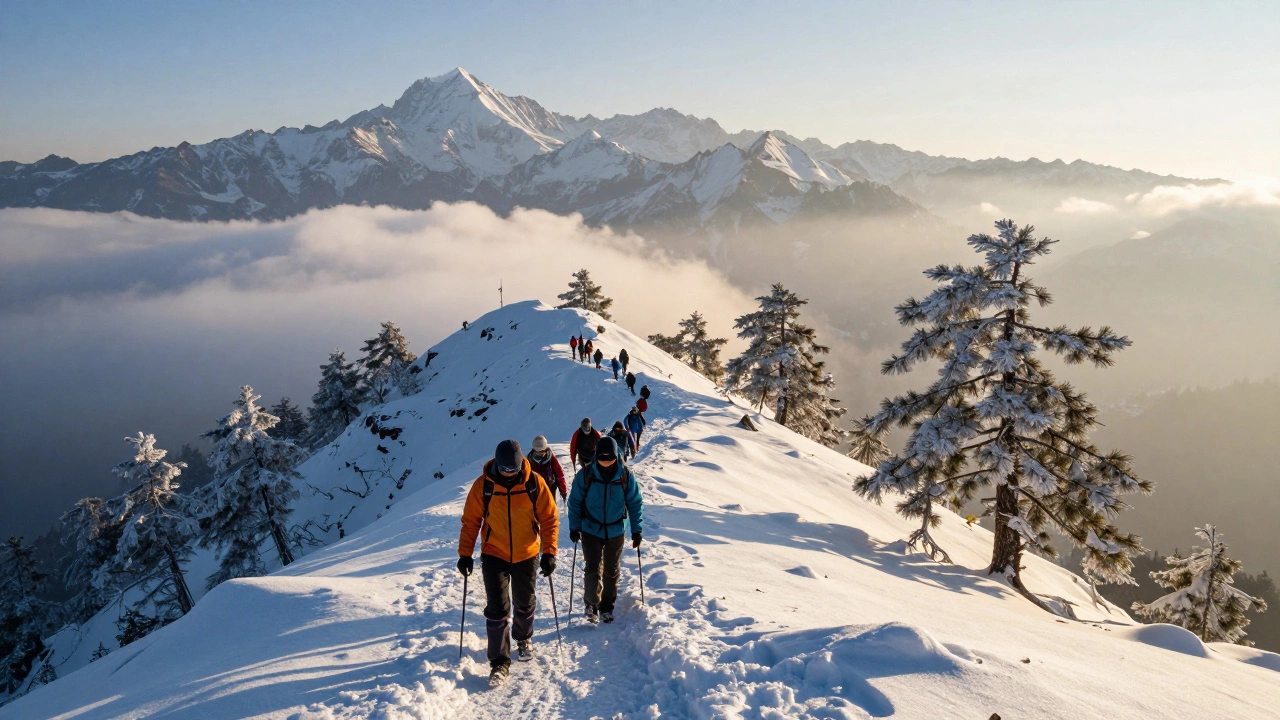
Kedarkantha sits in the Uttarakhand region and is widely considered the most accessible snow trek in the north. Every winter from December to February, thousands descend upon Dehradun and Sankri specifically for this route. Its popularity stems from being beginner-friendly. You don't need weeks of training to summit the 3,978-meter peak. Families, university students, and corporate teams book this trek by the dozens.
The trail starts near Chakrata and winds through oak forests before hitting open meadows. Because it can be done in four to five days, it fits perfectly into school holidays and long weekends. That logistical convenience drives its volume higher than any other winter trek. Operators say that in peak January weeks, you can almost walk shoulder-to-shoulder on the ridge.
Triund: The Gateway to the Mountains
If Kedarkantha is the winter king, Triund holds the crown for year-round traffic. Located in Himachal Pradesh, specifically above the town of Dharamshala, this destination is unique. Unlike many high-altitude treks that require permits and camping gear, Triund allows day-trippers to reach the summit via public transport and hike back. This accessibility makes it the highest-volume starting point for anyone new to hills.
Tourists visit McLeod Ganj and Dharamshala for culture but inevitably end up on this trail to see the Dhauladhar range. The trek takes about three hours each way. Because there are guesthouses at the top and tea stalls along the way, it accommodates large groups without forcing a wild-camping experience. Consequently, its visitor numbers dwarf more isolated mountain paths.
Valley of Flowers: The Summer Bloom
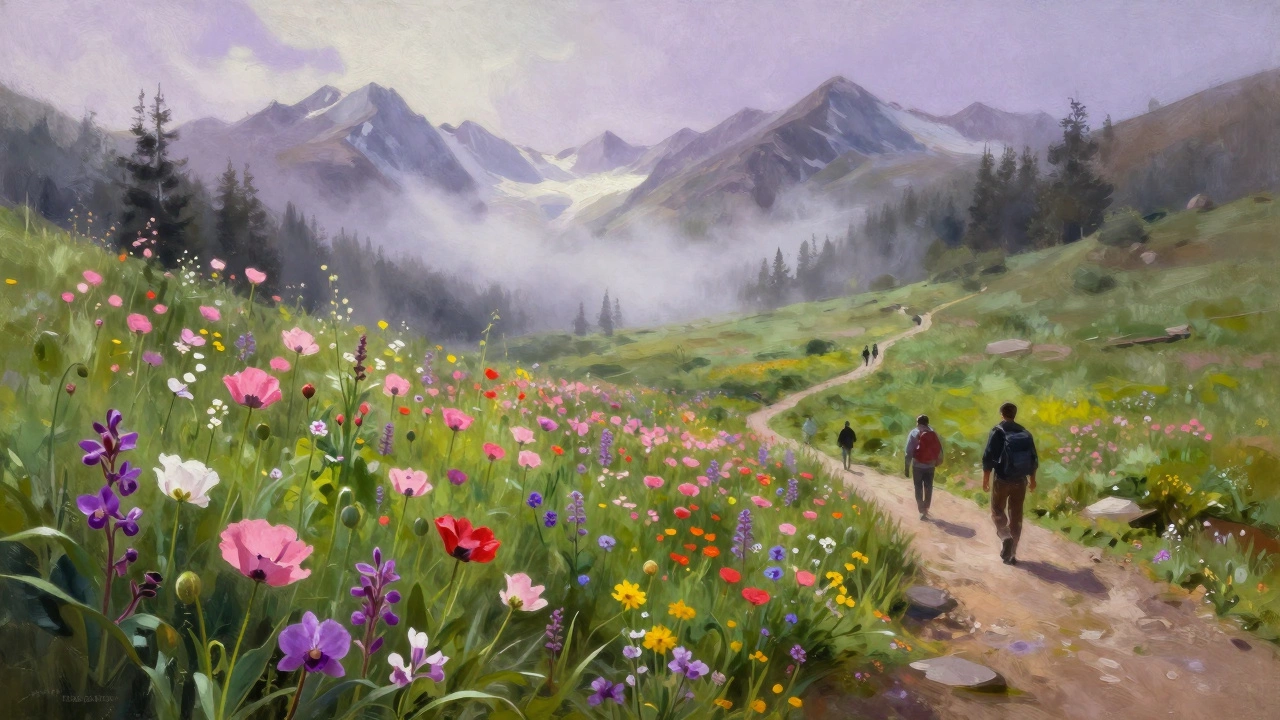
Once the snow melts and the rains subside, the flow shifts to Uttarakhand again. The Valley of Flowers National Park opens up fully in July and August. Being a UNESCO World Heritage Site limits access compared to regular trails, yet it still draws immense crowds due to its rare biodiversity. The visual payoff of a valley filled with alpine blooms creates a magnetic pull that seasonal treks elsewhere cannot match.
The logistics are slightly stiffer here. You must enter through Joshimath and pass through Govindghat. Forest officials monitor entry closely to prevent damage to the flora. Despite these restrictions, the sheer fame of the site ensures that it remains one of the most talked-about natural attractions in the Himalayas.
| Location | Peak Altitude | Best Season | Difficulty Level |
|---|---|---|---|
| Kedarkantha | 3,978 meters | December to March | Easiest Snow Trek |
| Triund | 2,780 meters | Year-round (except heavy monsoon) | Very Easy |
| Valley of Flowers | 3,650 meters | July to September | Moderate |
| Stok Kangri | 6,153 meters | June to August | Hard/Technical |
| Harmukh Gashar Brari | 4,890 meters | May to October | Moderate |
Why These Locations Dominate the Charts
You might wonder why these specific names keep recurring while others like Roopkund or Chandratal remain exclusive. The answer lies largely in support infrastructure. A "most visited" spot needs to be sustainable under human pressure. In places like Triund and Kedarkantha, you find established homestays, water sources, and food vendors.
In contrast, deep wilderness treks lack these buffers. If you attempt a remote expedition in Ladakh without proper planning, the risk increases exponentially. Therefore, the data reflects not just beauty, but reliability. Trekkers prioritize routes where help is available if a slip occurs. This creates a feedback loop: safe routes become popular, leading to better facilities, making them even more popular.
Safety and Carrying Capacity Concerns
High volume brings challenges. During peak periods, trash accumulation becomes visible on otherwise pristine slopes. Local authorities in Himachal Pradesh and Uttarakhand have started enforcing strict waste disposal rules. For example, carrying non-biodegradable waste out is now mandatory at several base camps. Violators face fines that act as effective deterrents.
Crowd control is also vital. On steep sections of Kedarkantha, congestion leads to bottlenecks. Some operators have introduced time-slot bookings for guide-assisted climbs to smooth out the flow. This management style helps preserve the environment while allowing the high number of visitors the area attracts.
Choosing Your Route Based on Timing
Since today is late March, the window for snow treks is closing fast. If you plan your trip for the next few weeks, Kedarkantha might still offer snow patches, especially at higher elevations near the summit. However, the lower parts of the trail will likely turn muddy and green quickly.
Summer treks like Stok Kangri in Ladakh require waiting until June. Before that, the high passes often block transit roads due to avalanches. Knowing the seasonal windows saves you from wasted travel expenses. Most beginners target the April-June period for moderate altitude hikes or wait until October for autumn clarity in the foothills.
Ultimately, finding the single most visited spot depends entirely on what you seek. For pure volume, Triund wins because it requires no special gear. For the quintessential snow experience, Kedarkantha is unbeatable. Neither rivals the Taj Mahal's historical significance, but they represent the pulse of active Indian tourism.