India's Heritage Timeline Explorer
Explore the oldest structures and artifacts in India, from prehistoric cave paintings to ancient urban settlements.
When you ask what the oldest thing in India is, you are not looking for a single building or a statue. You are digging into deep time. The answer depends entirely on how you define "thing." Are we talking about human-made structures? Artifacts? Or evidence of life itself?
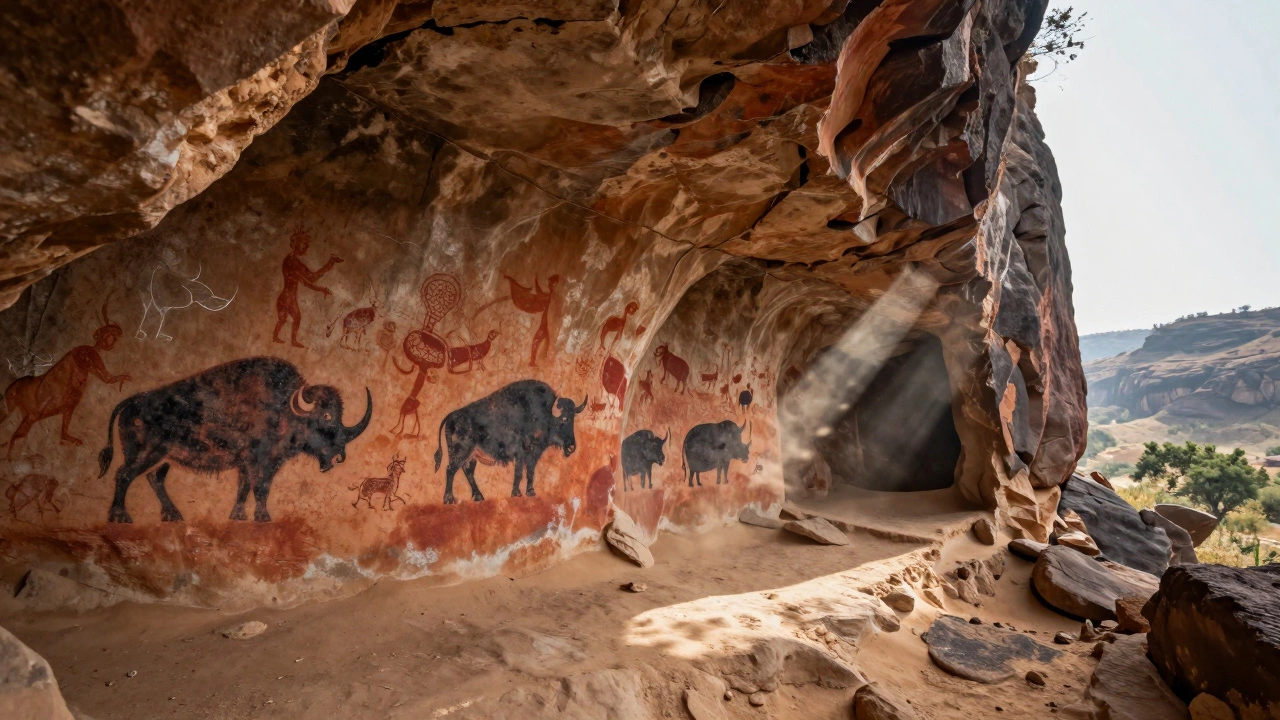
If you mean human history, the answer points to the Bhimbetka Rock Shelters, located in Madhya Pradesh. These caves contain paintings that date back over 30,000 years, making them some of the earliest surviving examples of human artistic expression in the subcontinent. But if you look further back, past humans, to the geological record, India holds fossils and tectonic evidence that stretches back hundreds of millions of years.
This guide breaks down the timeline of antiquity in India, moving from the prehistoric cave art that defines our early human presence to the monumental architecture of ancient civilizations. We will explore where these sites are, why they matter, and how you can visit them without ruining their preservation.
The Prehistoric Layer: Bhimbetka and the Stone Age
To find the oldest tangible evidence of human activity in India, you have to go to the Vindhya Range in Madhya Pradesh. Here lies Bhimbetka a UNESCO World Heritage site featuring over 750 rock shelters with Paleolithic cave paintings. Discovered in 1957 by archaeologist V.S. Wakankar, these shelters are not just holes in the ground; they are libraries of stone.
The paintings at Bhimbetka span multiple eras. The oldest layers, known as the Paleolithic period, show large animals like bison, elephants, and rhinos. Artists used natural pigments-ochre, charcoal, and limestone-to create images that have survived millennia. Some of these artworks are estimated to be between 30,000 and 10,000 years old. This predates the construction of the Pyramids in Egypt by tens of thousands of years.
Why are these caves so well-preserved? The geography helps. The sandstone cliffs provided natural roofs that protected the walls from heavy monsoon rains and direct sunlight. The inhabitants likely used these shelters during the dry season, adding new layers of art as generations passed. When you visit today, you see a palimpsest-a manuscript written over many times. You can distinguish the rough, bold strokes of the Paleolithic artists from the more detailed, narrative scenes of the Mesolithic and Chalcolithic periods that followed.
It is important to note that Bhimbetka is not the only site of its kind. Nearby sites like Lakhani and Jwalapuram also hold significant prehistoric artifacts. Jwalapuram, in Andhra Pradesh, has yielded stone tools that suggest human presence even earlier, potentially linked to migrations out of Africa before the Toba volcanic eruption around 74,000 years ago. However, Bhimbetka remains the most accessible and visually striking example of this deep history.
The Urban Dawn: Harappa and Mohenjo-Daro
Jump forward roughly 25,000 years, and you arrive at the Bronze Age. This is when humans in India transitioned from nomadic hunter-gatherers to settled urban dwellers. The Indus Valley Civilization an ancient civilization that flourished in the northwestern regions of South Asia from 3300 BCE to 1300 BCE gives us the oldest cities in India.
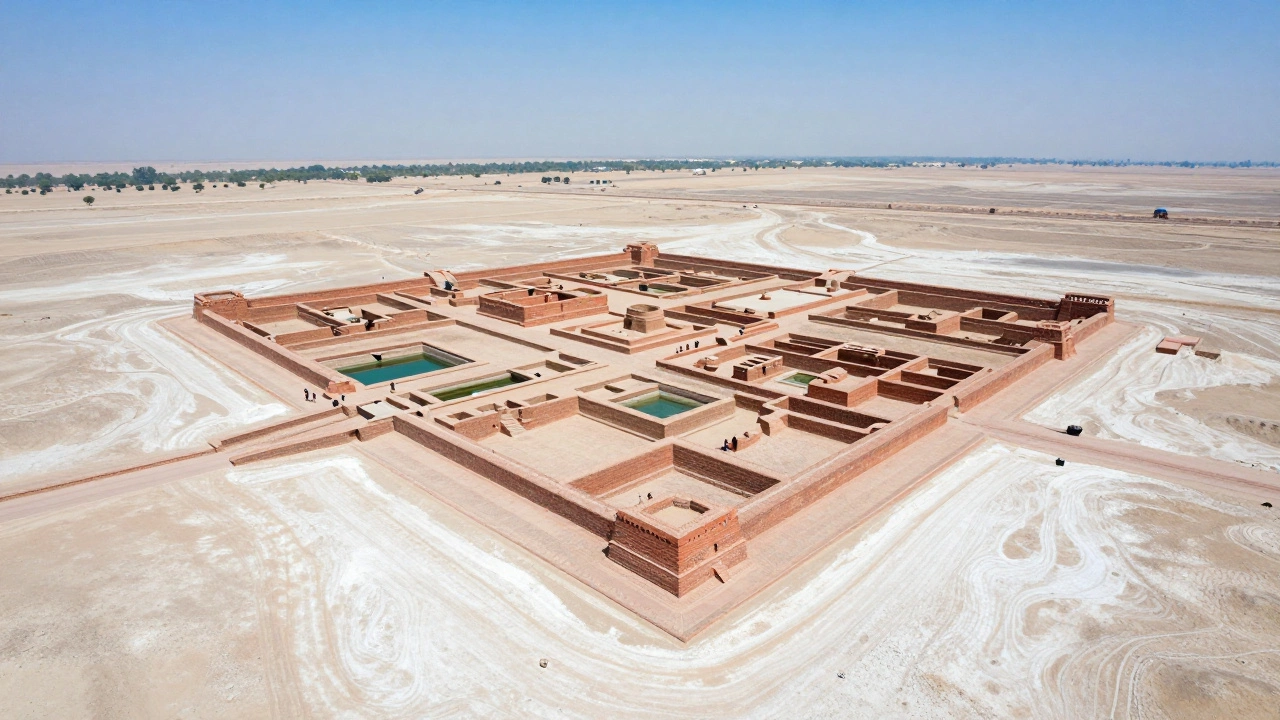
Two sites stand out: Mohenjo-Daro in present-day Pakistan and Harappa, also in Pakistan, but with significant extensions into Gujarat and Haryana in modern India. In India, the site of Dholavira an Indus Valley Civilization city in Gujarat known for its water management systems offers a pristine view of this era. Dholavira dates back to around 2650 BCE.
What makes these ruins "old" in a way that feels different from the caves? They represent complex society. The people of Dholavira built massive fortifications, multi-story houses, and sophisticated water reservoirs. The Great Bath at Mohenjo-Daro, though technically outside current Indian borders, is part of this same cultural continuum. These structures were made of fired bricks, a technology that allowed them to withstand centuries of erosion better than mud-brick settlements elsewhere.
The decline of the Indus Valley Civilization remains a mystery. Was it climate change? River shifts? Or invasion? Whatever the cause, the urban centers were abandoned, leaving behind a silence that lasted for centuries until the rise of later kingdoms. For travelers, visiting Dholavira requires a trip to the Rann of Kutch in Gujarat. The isolation adds to the experience; you are standing in a place that was once a bustling metropolis, now reclaimed by the desert.
The Megalithic Mystery: Burial Sites of South India
While the North focused on urban planning, parts of South India were engaged in megalithic traditions. Megaliths large stone structures built during the late Neolithic and Bronze Age periods, often used as tombs are scattered across Tamil Nadu, Karnataka, and Kerala. These are not temples in the religious sense we know today; they are burial monuments.
Sites like Hogenakkal and Sittanavasal feature dolmens (table-like stones supported by uprights) and cairns (mounds of stones). These structures date back to around 1000 BCE to 500 BCE. They predate the great temple dynasties of Chola and Pallava. The people who built them left no written records, which makes interpreting their purpose challenging. Archaeologists believe these were elite burials, marked by distinctive pottery and iron tools found within the chambers.
The significance of these sites lies in their continuity. Many of these locations later became sacred spots for Hindu and Jain communities. The layering of history is visible here: a megalithic tomb might sit beneath a medieval shrine. This shows how Indian culture often absorbs older traditions rather than erasing them. If you are interested in quiet, less crowded heritage sites, these megalithic parks offer a profound connection to the Iron Age ancestors of South India.
Ancient Monuments: Temples and Stupas
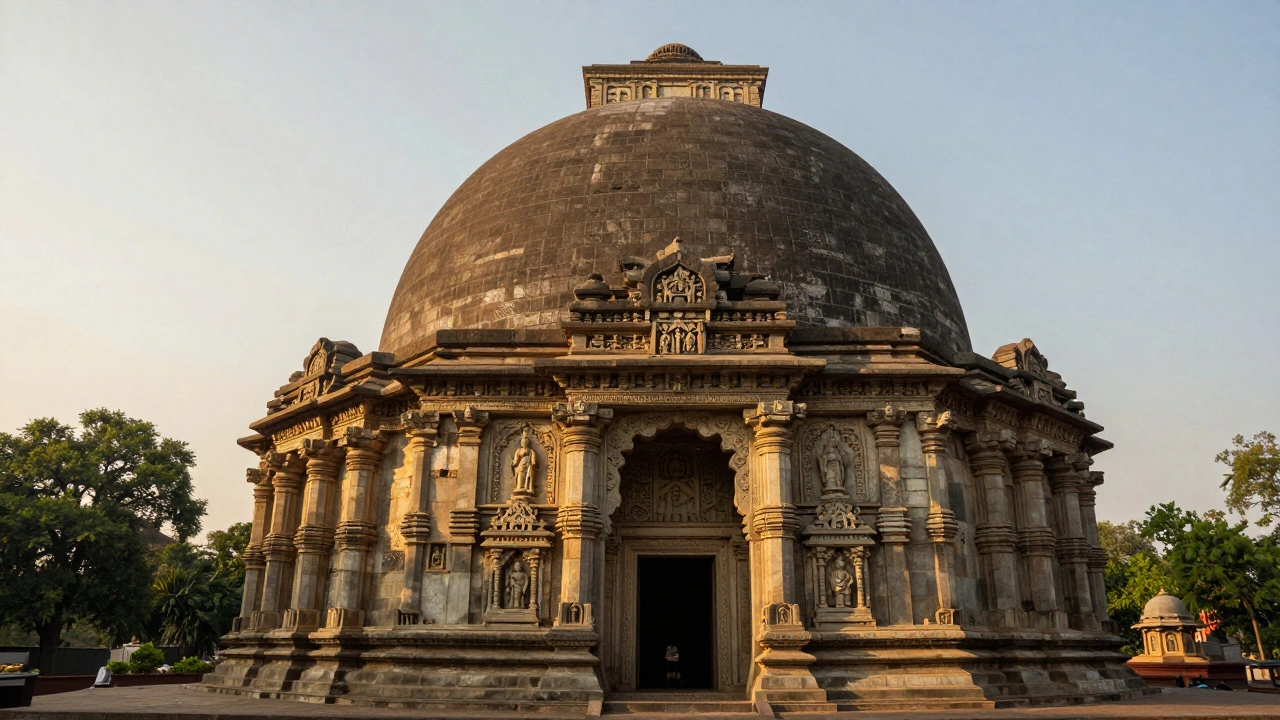
As history moves into the Common Era, the definition of "oldest" shifts to constructed monuments. The Sanchi Stupa a Buddhist monument in Madhya Pradesh built by Emperor Ashoka in the 3rd century BCE is a prime candidate for the oldest surviving major structure. Commissioned by Emperor Ashoka around 250 BCE, it originally housed relics of the Buddha. While it has been renovated over the centuries, the core structure and the original torana (gateways) retain their ancient character.
In contrast, stone temples are a later development. Early temples were built of wood and have long since rotted away. The transition to stone began in earnest with the Pallava dynasty in the 7th century CE. The Mahabalipuram a town in Tamil Nadu famous for its 7th and 8th-century monuments carved from rock rathas and the Shore Temple are masterpieces of this era. While not as old as the Sanchi Stupa, they represent the birth of classical Indian temple architecture.
Further north, the Ajanta and Ellora Caves provide a chronological bridge. Ajanta’s earliest caves date to the 2nd century BCE, while Ellora’s Kailasa Temple, carved from a single cliff face, stands as one of the largest monolithic excavations in the world. These sites demonstrate the technical prowess of ancient engineers who could carve intricate details into hard basalt without modern tools.
| Site Name | Approximate Age | Type of Structure | Key Feature |
|---|---|---|---|
| Bhimbetka Rock Shelters | 30,000+ years | Natural Cave / Art | Paleolithic cave paintings |
| Dholavira | 2650 BCE | Urban Settlement | Water management system |
| Sanchi Stupa | 250 BCE | Religious Monument | Buddhist relic chamber |
| Mahabalipuram | 7th Century CE | Rock-cut Temple | Monolithic rathas |
Preservation Challenges and Ethical Travel
Visiting these ancient sites comes with responsibility. The very air we breathe accelerates the decay of organic pigments in caves like Bhimbetka. Humidity and carbon dioxide from tourists’ breath can cause flaking of the paint. This is why access to certain inner caves is restricted. Rangers monitor visitor numbers strictly.
At Dholavira, the challenge is environmental. The site is in an arid zone, and flash floods can damage exposed brickwork. Conservation efforts involve reinforcing structures without altering their historical appearance. As a traveler, you should stick to designated paths. Touching the rocks at Mahabalipuram or the walls at Sanchi transfers oils that degrade the surface over time.
Local communities play a crucial role in preservation. In many heritage zones, livelihoods depend on tourism. Supporting local guides and buying locally made crafts ensures that conservation funds flow back to the region. It creates a sustainable cycle where the community becomes a stakeholder in protecting the past.
Conclusion: A Timeline in Stone
So, what is the oldest thing in India? If you want the oldest human mark, it is the handprints and animal sketches at Bhimbetka. If you want the oldest city, it is Dholavira. If you want the oldest standing monument, it is the Sanchi Stupa. Each answer tells a different story about human resilience, creativity, and adaptation.
India’s heritage is not a static museum exhibit; it is a living landscape. The stones whisper stories of hunters, kings, monks, and merchants. By visiting these sites with respect and curiosity, you become part of that ongoing narrative. You are not just observing history; you are witnessing the endurance of human spirit across millennia.
Is Bhimbetka safe to visit?
Yes, Bhimbetka is generally safe for tourists. It is a well-managed archaeological park with security personnel. However, it is located in a forest area, so you should follow guide instructions, stay on marked trails, and avoid wandering off alone. The best time to visit is between October and March when the weather is pleasant.
Can I touch the cave paintings at Bhimbetka?
No, touching the paintings is strictly prohibited. The oils from your skin can damage the fragile pigments. Flash photography is also banned in many caves to prevent light degradation. Use a zoom lens if you want close-up photos.
Which is older: Taj Mahal or Sanchi Stupa?
The Sanchi Stupa is much older. It was built around 250 BCE, while the Taj Mahal was constructed in the 17th century CE (1632-1653). The Sanchi Stupa predates the Taj Mahal by nearly two thousand years.
How do I reach Dholavira?
Dholavira is located in the Rann of Kutch, Gujarat. The nearest airport is in Bhuj. From Bhuj, you can hire a taxi or take a bus to Dholavira, which is about 90 kilometers away. Permits may be required depending on current regulations, so check with the local tourism office before traveling.
Are there any prehistoric sites in South India?
Yes, besides Bhimbetka in Central India, South India has significant prehistoric sites. Jwalapuram in Andhra Pradesh has yielded stone tools dating back to the Lower Paleolithic era. Additionally, megalithic burial sites in Tamil Nadu and Karnataka date back to the Iron Age (around 1000 BCE).