Beach Comparison Tool
Which Beach Suits You Best?
Compare key attributes of India's top beach contenders based on the article content
Radhanagar Beach
Andaman Islands
Unchanged Minimal Tourism
Palolem Beach
Goa
Balanced Local Culture
Compare Key Attributes
Crowd Level
Natural Beauty
Accessibility
Tranquility
Your Result
Beach
India has over 7,500 kilometers of coastline. That’s more than enough sand, surf, and sun to make any beach lover dizzy. But if you’re asking which one stands above the rest - the real queen - you’re not just looking for a pretty view. You’re looking for the one that feels like magic when you step onto it.
Radhanagar Beach, Andaman Islands
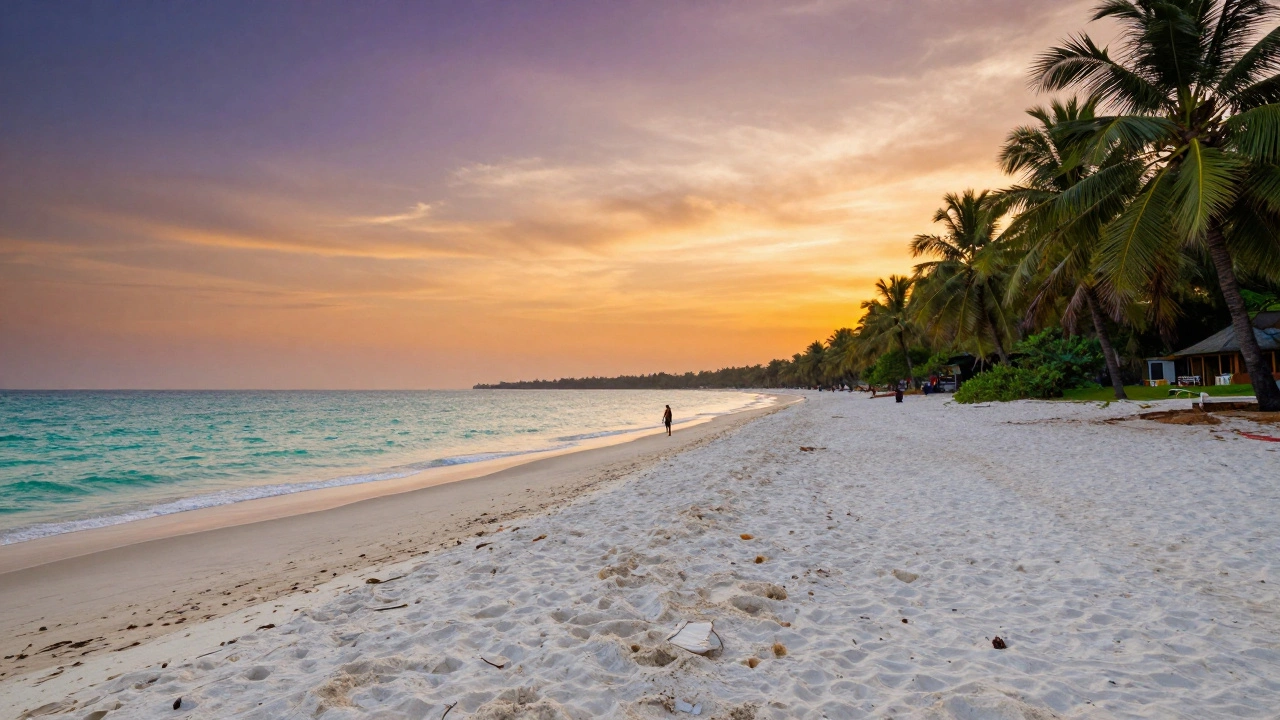
Most people who’ve been there will tell you the same thing: Radhanagar Beach isn’t just beautiful. It’s otherworldly. Located on Havelock Island in the Andaman and Nicobar archipelago, this stretch of white sand is so soft it feels like powdered sugar under your toes. The water? A gradient of turquoise that shifts to deep blue as it rolls toward the horizon. No high-rises. No loud music. Just the sound of waves and the occasional call of a kingfisher.
It’s not just a postcard. In 2004, Time Magazine named it one of the best beaches in Asia. More than two decades later, it still holds that crown. Why? Because it hasn’t been overdeveloped. The local government keeps tourism numbers controlled. No jet skis. No parasailing. No vendors pushing coconut water every five steps. You get silence. You get space. You get the kind of peace that resets your nervous system.
Visit at sunset. Watch the sky turn from gold to deep purple while the tide licks the shore like a slow, rhythmic breath. That’s the moment you understand why this beach is called the queen.
Palolem Beach, Goa
Goa gets all the attention. And for good reason. But not all Goan beaches are created equal. Palolem, tucked into the southern tip of Goa, is the quiet cousin to the party beaches of North Goa. It’s a crescent of golden sand framed by palm trees and gentle hills. The water is calm enough for swimming even when the monsoon winds are still blowing.
Unlike Baga or Calangute, Palolem doesn’t feel like a marketplace. You won’t find 20 shacks selling the same fried fish curry. Instead, you’ll find a few family-run shacks serving fresh crab curry with coconut rice. Locals still fish here. Kids play football on the shore. You can rent a bamboo hammock for the afternoon and do nothing but watch the boats drift by.
It’s not the biggest or the whitest beach in India. But it’s the most balanced. It gives you relaxation without boredom, beauty without crowds. For many, it’s the beach they return to year after year - not because it’s flashy, but because it feels like home.
Why Not Goa’s Other Beaches?
People often assume Goa is the default answer. But let’s be real: most of Goa’s famous beaches are now packed. Baga has neon lights and DJs at noon. Anjuna is a flea market with sand. Miramar? It’s got parking issues and plastic bottles washing up after every tide.
Palolem works because it’s managed differently. The beach is protected under local conservation rules. Plastic bags are banned. Motorized boats can’t come closer than 100 meters. Even the number of sunbeds is limited. It’s not perfect - you’ll still find a few tourists with Bluetooth speakers - but it’s the closest India has come to preserving a beach as a natural space, not a commodity.
The Andaman Difference
Radhanagar wins because it’s untouched. You need a flight to get there. You need to plan. You can’t just hop on a train and show up. That filters out the mass tourism that ruins so many other Indian beaches.
Andaman’s waters are clearer than almost any other in the country. Coral reefs lie just offshore. Snorkelers see parrotfish, sea turtles, and even the occasional reef shark. The sand doesn’t burn your feet, even in March. And unlike the crowded shores of Kerala or Tamil Nadu, you can walk for half a kilometer without seeing another person.
There’s no commercial beach club here. No umbrella rentals. No lifeguards in bright vests. Just nature, left alone.

What About Kerala’s Backwaters?
Some argue that Kovalam or Varkala should be queens. They’re beautiful. Varkala’s cliffs are dramatic. Kovalam has the Ayurvedic resorts. But they’re not beaches in the same way. Kovalam is more of a resort strip. Varkala is a cliffside town with a narrow beach below. They’re scenic, yes - but they don’t offer the wide, open, endless stretch that defines a true beach experience.
The queen doesn’t need cliffs. She doesn’t need yoga studios. She just needs sand, sea, sky, and silence.
The Real Test: Would You Go Back?
Here’s how you know a beach is the queen: you think about it months after you leave. You dream about the sound of the waves. You miss the way the breeze smells like salt and coconut.
Radhanagar makes you want to quit your job and move there. Palolem makes you want to come back next winter. That’s the difference.
Radhanagar is the undisputed queen. It’s the one that doesn’t beg for attention. It doesn’t need Instagram filters. It doesn’t need to be called ‘the most beautiful.’ It just is.
When to Visit
Radhanagar is best between November and February. The weather is dry, the sea is calm, and the temperatures hover around 28°C - perfect for barefoot walks and lazy afternoons. Avoid May to September. That’s monsoon season. The sea gets rough, the trails get muddy, and many shacks close.
Palolem is good year-round, but November to March is ideal. April can get hot, and June to August brings heavy rain.

How to Get There
To reach Radhanagar: Fly into Veer Savarkar International Airport in Port Blair. Then take a ferry to Havelock Island (about 2.5 hours). From the jetty, hire a taxi or rent a scooter. The beach is 7 kilometers away.
To reach Palolem: Fly into Dabolim Airport in Goa. Drive 50 kilometers south - about 1.5 hours. There are plenty of cabs and shared jeeps from Margao or Panjim.
What to Pack
- Light cotton clothes - it’s humid, even in winter
- Reef-safe sunscreen - coral reefs are fragile
- Waterproof bag - for your phone and camera
- Flip-flops - you won’t need shoes
- Books or journals - you’ll have time to read
Leave the cocktails and neon swimsuits at home. This isn’t a party beach. It’s a place to remember what quiet feels like.
Why Other Beaches Don’t Compare
There are stunning beaches all over India - Gokarna, Marari, Puri, Diu. But they all have trade-offs. Gokarna is getting crowded. Marari is too quiet for some. Puri has temple crowds. Diu is remote and hard to reach.
Radhanagar doesn’t have a trade-off. It’s accessible enough to reach, but not so easy that it’s overrun. It’s beautiful without being staged. It’s peaceful without being empty. It’s the only beach in India that feels like it was designed for you - not for tourists.
That’s why, when you ask who the queen is, the answer isn’t debated. It’s whispered.
Is Radhanagar Beach really the best beach in India?
Yes, by most accounts - especially among travelers who’ve seen multiple Indian beaches. Radhanagar won Time Magazine’s top Asian beach award in 2004 and still holds its reputation today because it’s preserved, not commercialized. Other beaches may be more famous, but few are as untouched or as consistently peaceful.
Can I visit Radhanagar Beach on a budget?
Absolutely. There are no luxury resorts on the beach itself. Basic bamboo shacks offer meals for under ₹300, and dorm-style guesthouses start at ₹800 per night. The main cost is getting there - flights to Port Blair aren’t cheap, but once you’re on Havelock Island, life is simple and affordable.
Is Palolem Beach better than Radhanagar?
It depends on what you want. Palolem is easier to reach, more lively, and perfect if you like a bit of local culture mixed with beach time. Radhanagar is quieter, more remote, and feels like a secret. Radhanagar wins for pure natural beauty. Palolem wins for balance. Neither is wrong - but Radhanagar is the crown holder.
Are there any dangerous animals or currents at Radhanagar?
No sharks or jellyfish are common in the main swimming area. The currents are mild, and the beach is naturally protected by coral reefs that break the waves. Still, always check local conditions. Avoid swimming at dusk, and never swim alone. The water is safe for most, but respect the ocean.
Can I camp on Radhanagar Beach?
Official camping is not allowed on Radhanagar Beach. The Andaman administration restricts overnight stays to protect the environment. But you can stay in nearby guesthouses that offer open-air rooms facing the sea. Some travelers bring tents and camp just off the beach - but that’s unofficial and discouraged. Stick to the local guesthouses.
What’s the best time of day to visit Radhanagar?
Sunrise and sunset are unbeatable. The light turns the water into liquid gold. Midday is hot and bright - perfect for swimming, but less magical. If you can, arrive by 4 p.m. and stay until after dark. The stars here are so clear you’ll see the Milky Way.
Final Thought: The Queen Doesn’t Need a Crown
She doesn’t need a title. She doesn’t need a sign. She doesn’t need to be voted on. Radhanagar Beach just is. And that’s why, after years of visiting beaches from Kerala to Gujarat, people still come back to this one. Not because it’s the biggest. Not because it’s the whitest. But because it’s the only one that makes you feel like you’ve found something real - hidden, quiet, and unforgettable.