India Beach Matchmaker
Find Your Perfect Beach
Discover Indian beaches that match your travel style, budget, and preferences
Best Time to Visit:
Why you'll love it:
Tips for Your Visit
When people ask which country in Asia has the most beautiful beaches, they’re not just looking for a name on a map. They want to know where the water glows turquoise, where the sand feels like powdered sugar under bare feet, and where the sunsets turn the sky into a watercolor painting. The answer isn’t simple-Asia has dozens of stunning coastlines. But if you’re asking for the most unforgettable, the most consistently breathtaking, the one that keeps travelers coming back year after year-India’s beaches rise to the top, especially when you look beyond the crowds and find the hidden gems.
India’s Beaches Are More Than Just Sun and Sand
Most people think of Goa when they hear "Indian beach." And yes, Goa has the vibe, the shacks, the parties. But India’s coastline stretches over 7,500 kilometers-from the rocky shores of Gujarat to the palm-fringed coves of Kerala. The real magic isn’t in the number of tourists, but in the diversity. In Karnataka, you’ll find Gokarna, where the sea crashes against ancient temples and the only noise is the tide and chanting monks. In Tamil Nadu, the beach at Mahabalipuram isn’t just sand and waves-it’s a 1,300-year-old UNESCO site with carved stone rathas (chariots) standing guard over the water.
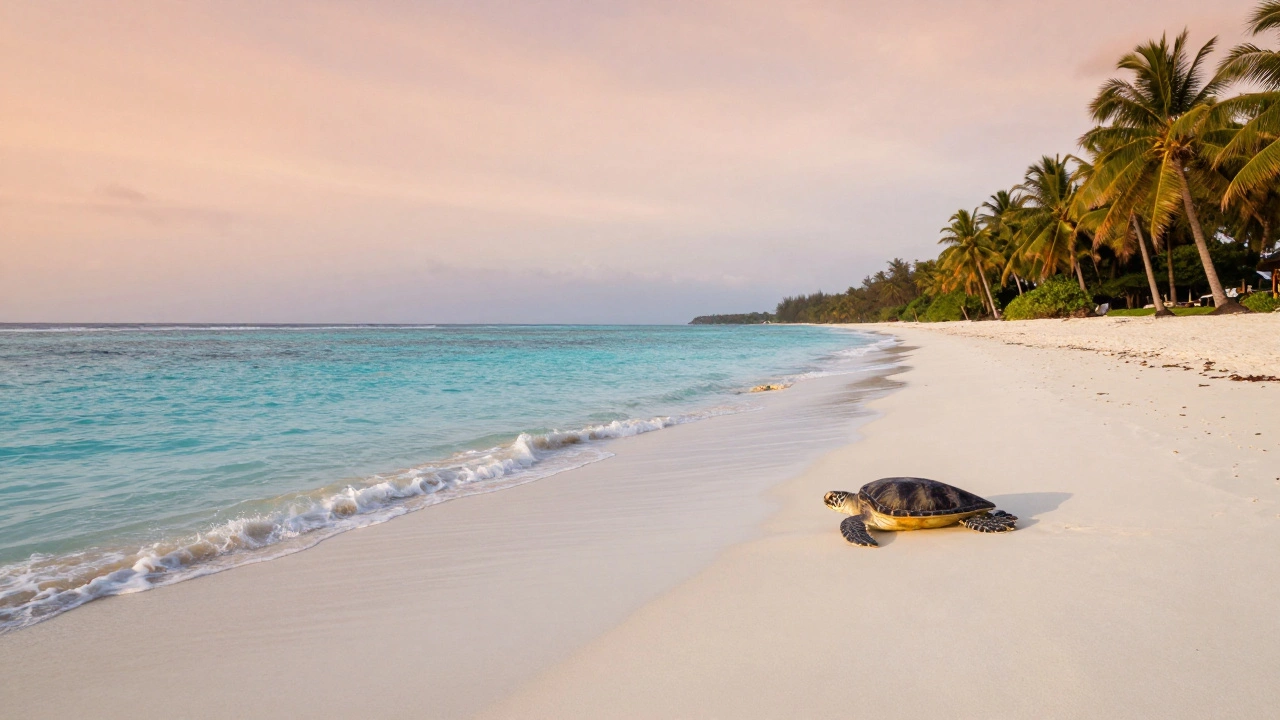
And then there’s the Andaman and Nicobar Islands. These islands aren’t just beautiful-they’re untouched. The water clarity here is among the highest in the world. At Radhanagar Beach on Havelock Island, you can see fish swimming six meters down through water so clear it looks like glass. The sand? White, fine, and so soft it doesn’t burn your feet even at noon. No resorts line the shore here. Just trees, silence, and the occasional turtle nesting at night.
Why India Beats the Competition
Thailand’s Phuket and Bali in Indonesia are often named as Asia’s top beach destinations. And they’re gorgeous. But they’ve been overrun. Phuket’s Patong Beach sees over 10,000 visitors a day in peak season. Bali’s Seminyak is packed with souvenir stalls and yoga studios that feel more like tourist traps than retreats. In India, you can still find solitude. In the Lakshadweep Islands, access is restricted to protect the ecosystem. Only 100 tourists per day are allowed on some islands. That means you might have a three-kilometer stretch of beach all to yourself.
India’s beaches also offer something few others do: cultural depth. In Diu, you’ll find Portuguese forts overlooking the Arabian Sea. In Puri, pilgrims bathe in the Bay of Bengal during the Jagannath Rath Yatra, a festival that draws over a million people. These aren’t just beaches-they’re living places, woven into the rhythm of daily life.
The Water Quality and Marine Life Are Unmatched
Water clarity matters. A 2024 study by the Indian Council of Medical Research found that the waters around the Andaman Islands had the lowest levels of microplastics and pollutants among all major coastal regions in South Asia. Compare that to Bali, where plastic waste has forced local governments to ban single-use plastics on beaches. In India’s Lakshadweep, coral reefs are thriving. Divers report sightings of manta rays, sea turtles, and even whale sharks-animals that are vanishing from more developed shores.
The marine biodiversity here is extraordinary. The Gulf of Mannar, off Tamil Nadu, is home to 3,600 species of marine life. That’s more than the entire Caribbean. And it’s protected as a marine national park. You won’t find this kind of ecological richness on crowded Thai or Filipino beaches.
Beaches That Feel Like They’re From Another Time
Take Varkala in Kerala. No high-rises. No neon signs. Just cliffs of red laterite rock dropping into the sea, with yoga shacks and herbal tea stalls tucked into the slopes. Locals still bathe in the ocean at dawn, and the scent of coconut oil and incense lingers in the air. It’s not Instagram-perfect-it’s real. And that’s why people return.
Or consider the beaches of Daman and Diu. These former Portuguese colonies have a quiet charm. The beaches here are long, empty, and lined with casuarina trees. At sunset, fishermen pull in their nets while children fly kites shaped like dragons. No one’s selling coconut water from a plastic cup. Instead, you’ll get it fresh from the tree, handed to you by a man who’s been doing it for 40 years.

What About the Maldives? Isn’t That the Best?
Yes, the Maldives has overwater bungalows and private islands. But it’s not part of Asia in the cultural or geographic sense most travelers mean. It’s an isolated archipelago, and it’s expensive. A one-night stay on a private island can cost more than a week in Goa. And while the water is stunning, the experience is often curated to the point of being artificial. You don’t meet locals. You don’t taste street food. You’re in a bubble.
India offers the same beauty without the price tag. You can stay in a beachside homestay in Gokarna for $15 a night and eat fresh seafood for $3. You can take a ferry to an uninhabited island for free. You can watch the sunrise with a cup of masala chai, not a $20 cocktail.
The Real Winner: Choice
India doesn’t have one best beach. It has dozens-each with its own soul. Want luxury? Try the private resorts in the Andamans. Want solitude? Head to the beaches of Kudle in Karnataka. Want culture? Go to Puri. Want surfing? Try Kovalam in Kerala, where the waves are consistent and the crowds are thin.
Other countries have beautiful beaches. But few have the combination of natural beauty, cultural richness, affordability, and variety that India offers. You don’t just visit an Indian beach-you experience it. You taste the salt on your lips, hear the temple bells in the distance, feel the sand shift under your toes as the tide rolls in. That’s why, year after year, travelers who’ve been to Bali, Phuket, and the Maldives come back to India. Not because it’s the cheapest. Not because it’s the most famous. But because it’s the most alive.
Best Indian Beaches You Can’t Miss
- Radhanagar Beach, Havelock Island (Andaman): Voted one of Asia’s top 10 beaches by Time Magazine. Crystal-clear water, powdery sand, zero commercialization.
- Gokarna, Karnataka: Spiritual beach town with five temples and a laid-back vibe. Perfect for yoga, meditation, and quiet sunsets.
- Radhanagar Beach, Havelock Island (Andaman): Voted one of Asia’s top 10 beaches by Time Magazine. Crystal-clear water, powdery sand, zero commercialization.
- Varkala, Kerala: Cliffside beach with natural springs and ayurvedic spas. No high-rises allowed.
- Puri Beach, Odisha: Sacred beach tied to Hindu pilgrimage. The waves here are believed to cleanse the soul.
- Lakshadweep Islands: Restricted access ensures pristine waters. Snorkeling here feels like swimming inside a living aquarium.

When to Go
The best time to visit India’s beaches is from October to March. That’s when the monsoon rains have cleared, the humidity drops, and the sea is calm. Avoid June to September-most beaches shut down due to heavy rains and rough seas. In the Andamans, November to February is peak season. In Goa, December is the busiest, so book early. For solitude, go in October or March-fewer tourists, same beauty.
What to Pack
- Light cotton clothes-breathable and quick-drying
- Biodegradable sunscreen-many Indian beaches ban chemical sunscreens to protect coral
- Water shoes-some beaches have sharp coral or rocky shores
- A reusable water bottle-plastic is banned on many islands
- A light shawl or scarf-for temple visits or cool evenings
Is India safer for beach travel than Thailand or Bali?
Yes, in most ways. Indian beaches have lower rates of petty crime compared to popular Thai and Balinese spots. The biggest risks are sunburn and dehydration-not theft or scams. Always swim in designated areas, avoid drinking tap water, and carry a basic first-aid kit. Local communities are generally welcoming and helpful.
Can I visit India’s beaches on a budget?
Absolutely. You can stay in a clean beachside homestay for $10-$20 a night, eat fresh fish curry for $2, and take local buses or ferries for under $1. Even in the Andamans, public ferries cost less than $15 one-way. Luxury resorts exist, but they’re not necessary to enjoy the beauty.
Are Indian beaches crowded?
Only in Goa during December and January. Elsewhere, beaches are quiet. In Lakshadweep, you need a permit to visit, which limits numbers. In Karnataka and Kerala, even in peak season, you’ll find stretches of sand with no one else around. The key is avoiding the well-known hotspots and exploring lesser-known spots.
Do I need a visa to visit India’s beaches?
Yes, most travelers need an Indian visa. Tourist visas are easy to get online through the Indian government’s e-Visa portal. It takes less than 72 hours to process. For the Andaman and Nicobar Islands, no special permit is needed for most nationalities-just your valid visa.
Are there any beaches in India that are off-limits?
Yes. Some beaches in Lakshadweep and the Andamans require special permits to protect fragile ecosystems. These are not closed to tourists-they’re managed to prevent over-tourism. Permits are easy to obtain through authorized tour operators. Never try to sneak onto restricted beaches-it’s illegal and harms marine life.
What to Do Next
If you’re ready to go, start by picking one beach that matches your vibe-peaceful, spiritual, adventurous, or luxurious. Book your flight to the nearest airport-Goa, Chennai, or Port Blair-and then take a local bus or ferry. Don’t try to see everything. One perfect beach, experienced slowly, is better than five rushed ones. Pack light, leave plastic behind, and let the rhythm of the sea guide you.