Trek Readiness Calculator
Are You Ready for India's Toughest Treks?
This calculator assesses your readiness for Kailash Mansarovar, Pin Parvati Pass, and Stok Kangri based on medical, physical, and logistical factors. These treks claim lives every year.
If you think trekking in India means gentle hill walks with tea stops and photo ops, you haven’t heard of the real ones. The toughest treks in India don’t just test your legs-they test your will, your lungs, and your sanity. There’s no medal at the end. No crowd cheering. Just silence, altitude, and the cold truth that one wrong step could change everything.
The real definition of tough
Tough doesn’t mean steep. Tough means Kailash Mansarovar. It means crossing three passes above 5,000 meters with no support, no oxygen tanks, and no second chances. It means walking 52 kilometers over four days in the rain, snow, and wind-with only a sleeping bag and a prayer. This isn’t a trek. It’s a pilgrimage that kills people.
The Kailash Mansarovar circuit in Tibet (accessed through India) is the most physically and spiritually demanding route on the planet. At 5,600 meters, the Dolma La Pass is the killer. Fewer than 1,500 people attempt it each year. Around 1 in 10 get turned back by altitude sickness. Two to three die annually. And yet, thousands still show up. Why? Because it’s not about fitness. It’s about surrender.
Pin Parvati Pass: The knife-edge challenge
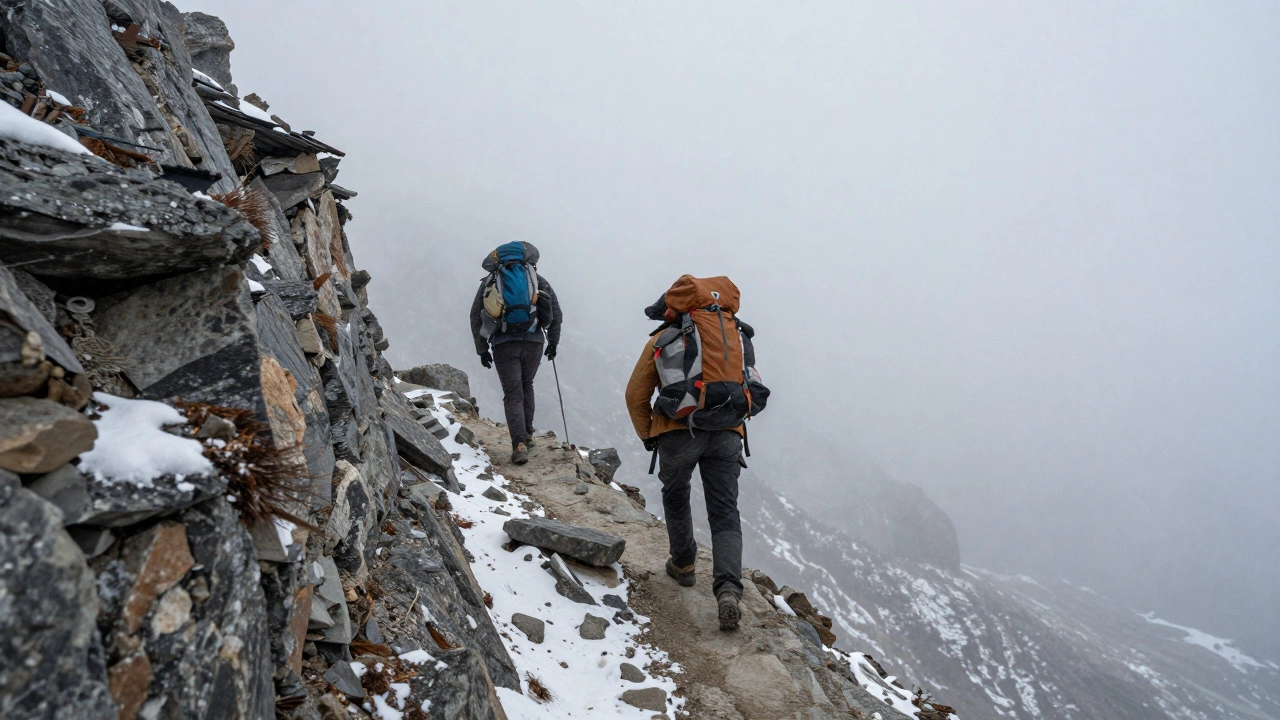
If Kailash is spiritual warfare, then Pin Parvati Pass is pure physical punishment. This 5,319-meter crossing in Himachal Pradesh links the Parvati Valley to the Pin Valley. It’s a 12-day trek that forces you to climb 2,000 meters in a single day, then descend 1,500 the next. The trail has no guardrails. No ropes. Just narrow ridges where one misstep sends you into a 1,000-meter drop.
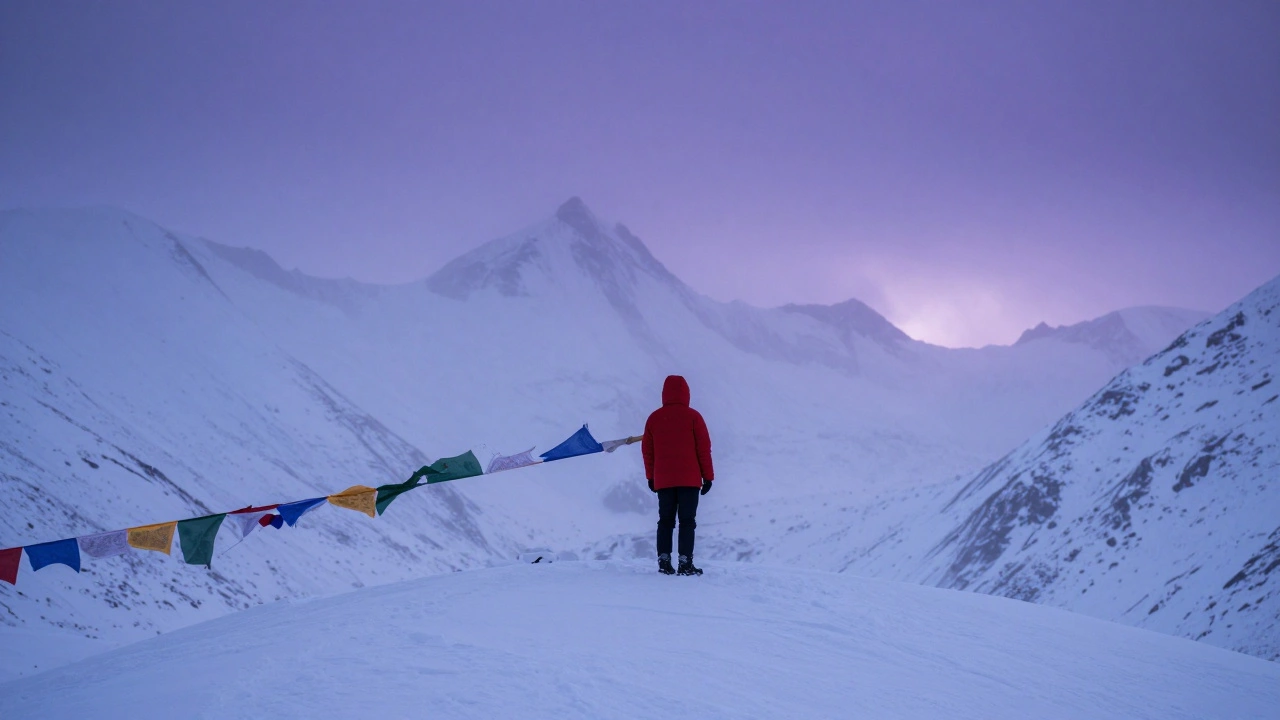
Teams have gone missing here. Snowslides wipe out paths overnight. The weather shifts from sunshine to blizzard in minutes. You carry all your food, fuel, and gear. No resupply points. No cell service. No rescue teams within 72 hours. This trek doesn’t care if you’re a gym rat or a mountaineer. It only cares if you’re prepared.
Markha Valley to Stok Kangri: The endurance trap
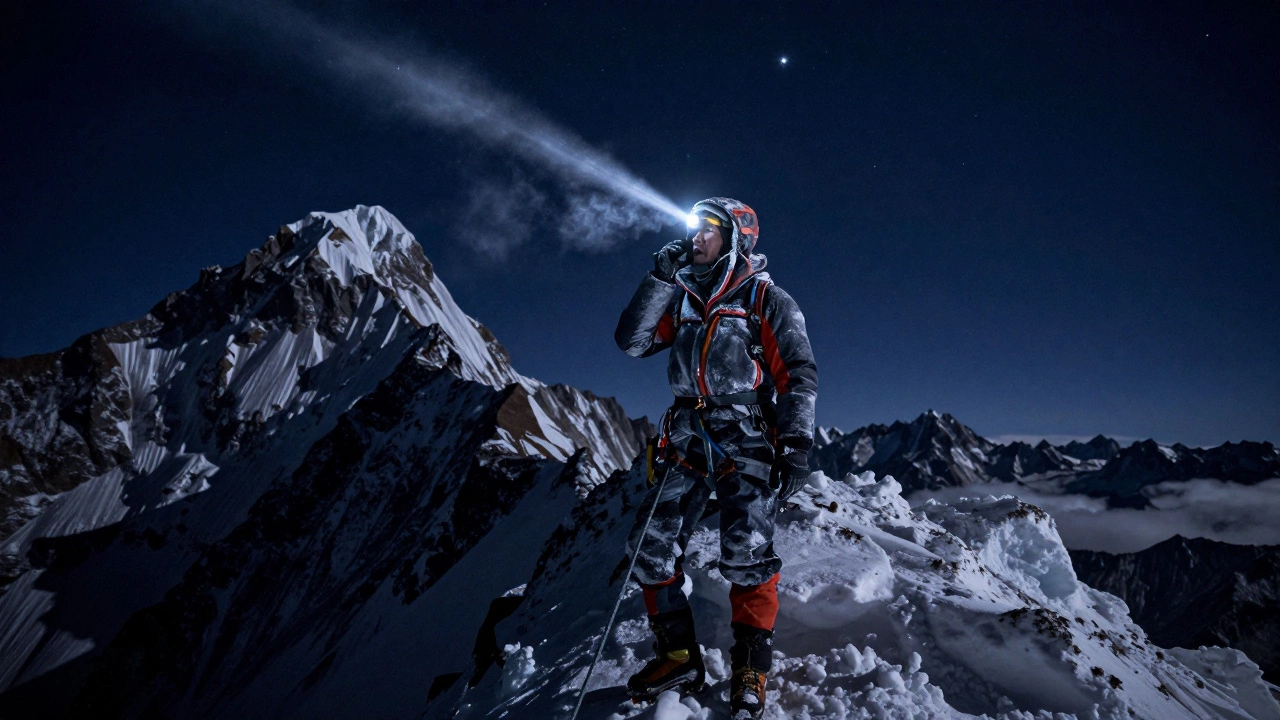
Markha Valley looks like a postcard. Green meadows, blue rivers, ancient monasteries. But the real test isn’t the valley-it’s what comes after. Stok Kangri, at 6,153 meters, is the highest trekking peak in India. You summit it after 7 days of trekking, already exhausted. The final push starts at 3 a.m. in -20°C temperatures. The air is so thin, your brain feels like it’s underwater.
Every year, 300+ people attempt this summit. About 40% turn back. Five to ten get airlifted for altitude sickness. One or two die. The mountain doesn’t announce its danger. It just waits. You think you’re ready because you’ve done Everest Base Camp. But this is different. There’s no fixed ropes. No Sherpas holding your hand. You climb alone.
Why these treks are harder than Everest Base Camp
Everest Base Camp gets all the attention. But it’s a luxury hike by comparison. You stay in teahouses. You buy hot chocolate. You have oxygen bottles on standby. The trail is packed with tourists. The risk is low. The reward? A selfie and a certificate.
The real tough treks in India are the opposite. No infrastructure. No safety nets. No guarantees. You’re not just climbing a mountain-you’re surviving a wilderness that doesn’t want you there. The Indian Himalayas aren’t parks. They’re ancient, untamed, and unforgiving. The altitude isn’t just a number. It’s a living thing that steals your breath, your thoughts, and sometimes, your life.
What you need to survive
If you’re serious about attempting one of these treks, here’s what actually matters:
- Acclimatization: Spend at least 10 days at 3,000+ meters before starting. No shortcuts. Your body needs time.
- Training: 6 months of hill hiking with a 15kg pack. Do 10-hour days. Do them in rain. Do them cold.
- Gear: A -30°C sleeping bag. A down jacket rated for -40°C. Goretex that doesn’t leak. No cheap gear. Your life depends on it.
- Team: Never go solo. Find a guide with real experience on the route. Not someone who did it once last year.
- Mental prep: You will cry. You will want to quit. You will think you’re dying. That’s normal. The trick is to keep moving, one step at a time.
The hidden cost
These treks don’t just take your energy-they take your time, your money, and your peace of mind. A Kailash Mansarovar permit costs over ₹50,000. Pin Parvati requires a special Inner Line Permit. You need travel insurance that covers high-altitude rescue. You’ll spend months planning. You’ll lose sleep. You’ll second-guess yourself.
And if you make it? You won’t post it on Instagram. You won’t tell your friends. You’ll sit quietly. Because you know what they don’t: that the mountain didn’t let you win. You just survived it.
Who should avoid these treks
If you’ve never hiked above 3,000 meters, don’t start here. If you have asthma, heart issues, or high blood pressure, don’t even consider it. If you think you can train in a month, you’re already in danger.
These aren’t bucket-list items. They’re life-altering experiences that leave scars-on your body, your mind, and your soul. The toughest trek in India isn’t the one with the highest peak. It’s the one that makes you question whether you’re strong enough to keep going.
What’s next if you survive
If you’ve done Kailash, Pin Parvati, or Stok Kangri, you’ve entered a rare club. The next step isn’t another trek. It’s silence. It’s reflection. It’s knowing that the real journey wasn’t on the trail-it was inside you.
Is Kailash Mansarovar trek dangerous?
Yes. Kailash Mansarovar is one of the most dangerous treks in the world. The Dolma La Pass at 5,600 meters has caused multiple deaths each year due to altitude sickness, hypothermia, and falls. Only experienced trekkers with proper acclimatization should attempt it. Medical evacuation is nearly impossible in remote sections.
Can beginners do Pin Parvati Pass?
No. Pin Parvati Pass is not for beginners. It requires prior high-altitude trekking experience, physical endurance for 10+ hour days, and the ability to handle extreme weather. Most teams spend months preparing. Even experienced hikers have turned back due to snowfall or exhaustion.
How long does the Markha Valley to Stok Kangri trek take?
The full trek from Markha Valley to Stok Kangri summit takes 10 to 12 days. The summit push alone takes 8 to 10 hours. You need at least 3 full days of acclimatization before attempting the peak. Rushing increases the risk of altitude sickness dramatically.
What’s the best time to attempt these treks?
Late May to mid-June and late August to early October are the only safe windows. Outside these months, snow blocks passes, and temperatures drop below -30°C. Monsoon rains in July make trails slippery and dangerous. Winter treks are only for elite mountaineers with expedition gear.
Do I need a permit for Kailash Mansarovar?
Yes. Kailash Mansarovar requires a special permit issued by the Indian government through authorized travel agents. You must travel in a group of at least 4 people. Solo travel is not allowed. Permits are limited and must be booked 4 to 6 months in advance.
Are there rescue services on these treks?
Very limited. In most areas, rescue teams take 24 to 72 hours to reach you. Helicopters can’t fly in bad weather. Many trekkers rely on local porters or fellow travelers for help. Travel insurance with high-altitude evacuation coverage is essential-but even that doesn’t guarantee a rescue.
If you’re still thinking about attempting one of these treks, ask yourself this: Are you ready to face the silence of a mountain that doesn’t care if you live or die? If the answer is yes, then go. But don’t go for the glory. Go because you need to know what you’re made of.