India USD to INR Exchange Rate & Budget Calculator (2026)
Calculate the value of your US Dollars in Indian Rupees based on different exchange tiers and estimate daily travel costs.
Results
Purchasing Power Estimates
Daily Budget Planner
Estimated Trip Cost
Total USD: $0
Total INR (Approx): ₹0
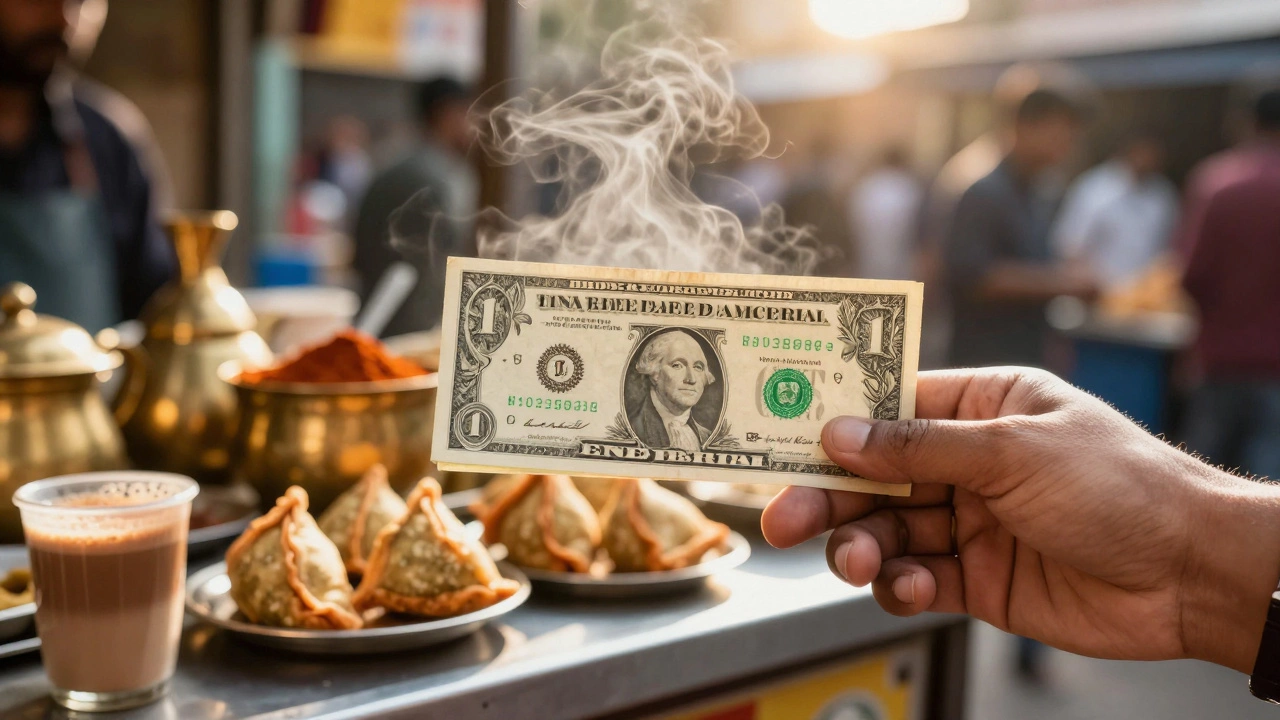
*Based on average daily spend. Excludes major inter-city transport.You pull out a crisp $1 bill at a street stall in Mumbai. The vendor smiles, hands you a samosa, and gives you change. That single dollar feels like it stretches further than it ever did back home. But how much is that dollar actually worth right now? As of mid-2026, the exchange rate hovers around 83 to 84 Indian Rupees (INR) for every 1 US Dollar (USD). This means your purchasing power in India is significantly higher than in most Western countries, making it one of the most affordable destinations for travelers.
However, knowing the raw number is only half the battle. The real value of your money depends on where you spend it. A luxury hotel in Delhi will drain your wallet faster than a homestay in Kerala, even if the exchange rate remains the same. Understanding the nuance between the official bank rate, the black market rate, and the actual 'street price' of goods is what separates a broke traveler from a savvy one. Let’s break down exactly what your dollar buys you in India today.
The Current Exchange Rate Reality
Exchange rates fluctuate daily based on global economic factors, oil prices, and trade balances. In June 2026, the US Dollar has remained relatively strong against the Indian Rupee. While the interbank rate might show 83.5 INR per USD, you won’t get this rate at an airport kiosk or a hotel lobby. Those places charge fees and offer worse spreads, often giving you closer to 80 or 81 INR per dollar.
To maximize your value, you need to understand the three tiers of currency conversion:
- Interbank Rate: The theoretical best rate (approx. 83.5 INR/USD). You rarely see this unless you are moving large sums via wire transfer.
- Airport/Hotel Rate: The worst rate (approx. 79-81 INR/USD). Avoid this unless you have no other choice for immediate cash needs.
- ATM Debit Card Rate: Usually close to the interbank rate, but subject to fees. This is often the best way to get cash if your bank waives foreign transaction fees.
If you withdraw cash using a debit card linked to a US account, you typically get the wholesale market rate. Just be aware that many US banks charge a flat fee (e.g., $5) plus a percentage (e.g., 1-2%) for international withdrawals. To make this worthwhile, withdraw larger amounts less frequently rather than small amounts often.
What Can You Actually Buy with $1?
Abstract numbers don’t help when you’re hungry. Let’s look at concrete examples of what 83-84 INR gets you on the ground. Prices vary by city-Delhi and Mumbai are more expensive than Varanasi or Jaipur-but these averages give you a realistic baseline for 2026.
| Item / Service | Approximate Cost (INR) | Approximate Cost (USD) |
|---|---|---|
| Street Food Samosa & Chai | 30 - 40 INR | $0.35 - $0.48 |
| Local Bus Ticket (Short Distance) | 15 - 25 INR | $0.18 - $0.30 |
| Bottle of Water (500ml) | 20 - 30 INR | $0.24 - $0.36 |
| Basic Hotel Room (Hostel Dorm) | 400 - 600 INR | $4.80 - $7.20 |
| Three-Course Meal (Mid-range Restaurant) | 600 - 900 INR | $7.20 - $10.80 |
| Metro Ride (Delhi/Mumbai) | 30 - 60 INR | $0.36 - $0.72 |
| Day Trip Taxi/Auto Rickshaw (Negotiated) | 800 - 1200 INR | $9.60 - $14.40 |
Notice that food is incredibly cheap. You can eat well for under $5 a day if you stick to local eateries and street vendors. Transportation is also inexpensive, especially public transit. However, imported goods, alcohol, and international brand clothing will cost you nearly as much as they do in the US, negating the exchange rate advantage.
Smart Ways to Access Your Money
Carrying stacks of US dollars isn't the smartest move. While some tourist traps accept USD, they often use inflated exchange rates to their advantage. Here is how to manage your finances efficiently in India.
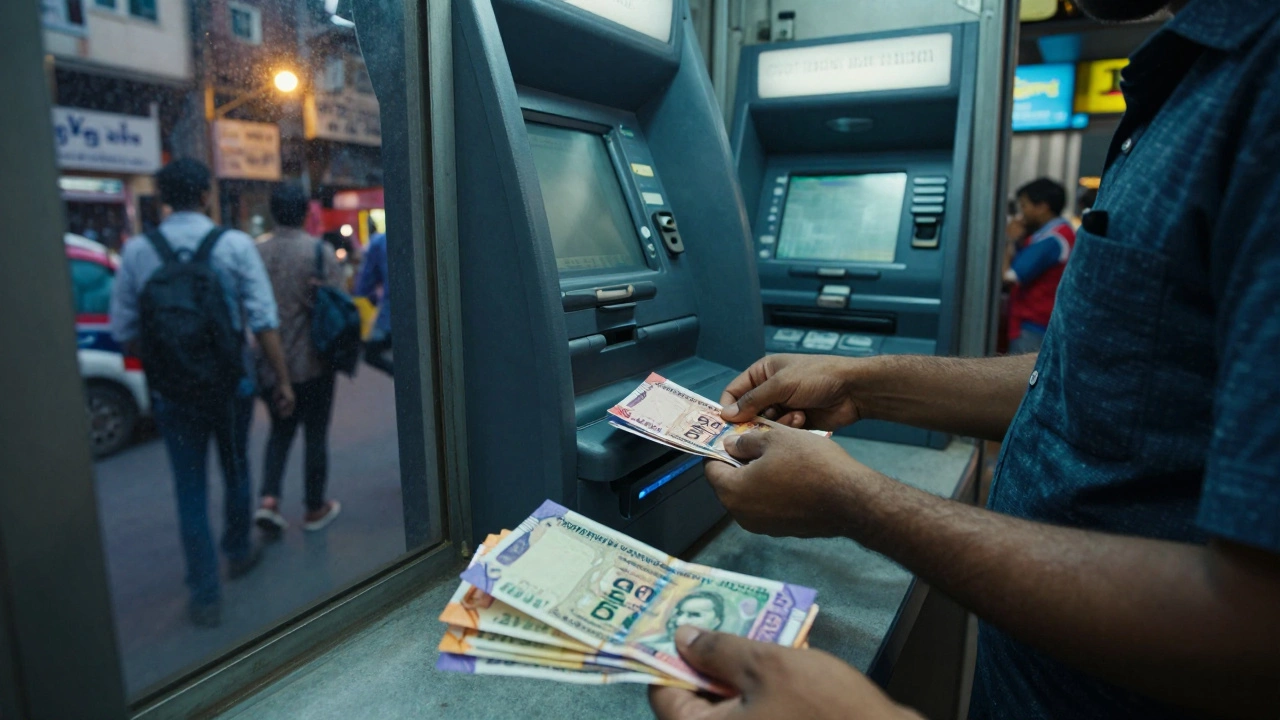
Use ATMs Wisely: Major banks like HDFC, ICICI, and State Bank of India have ATMs that accept Visa and Mastercard networks. These machines dispense Indian Rupees directly. Always choose to be charged in INR, not USD. If the ATM asks if you want 'Dynamic Currency Conversion' (DCC), select NO. DCC allows the machine to convert the currency at a poor rate before sending it to your bank, costing you extra.
Digital Payments Are King: India has undergone a massive digital payment revolution. UPI (Unified Payments Interface) is the standard for everything from buying vegetables to paying for hotels. As a foreigner, you may find linking your US credit card to apps like Google Pay or PhonePe challenging due to regulatory restrictions on cross-border UPI. However, contactless payments with Visa/Mastercard are widely accepted in cities. Always carry some cash for rural areas and small vendors who don’t accept cards.
Credit Cards for Big Tickets: Use your credit card for hotels, flights, and large purchases. This offers fraud protection and often earns travel points. Just ensure your card has no foreign transaction fees. Many premium US cards waive these fees, saving you 1-3% on every purchase.
Budgeting for Different Travel Styles
Your daily budget depends heavily on your travel style. Here is a breakdown of what you can expect to spend per person, per day, excluding major inter-city transport.
- Backpacker ($25 - $40/day): You’ll stay in hostels or budget guesthouses, eat street food or simple thalis, and use public buses or trains. You might splurge on one nice meal or activity per week.
- Mid-Range ($60 - $100/day): You’ll stay in private rooms at boutique hotels or 3-star chains, eat at decent restaurants, use ride-sharing apps (Uber/Ola) for transport, and pay for guided tours or entrance fees to monuments.
- Luxury ($150+/day): You’ll stay in 5-star properties, dine at fine dining establishments, hire private drivers, and enjoy exclusive experiences like heritage palace stays or wildlife safaris.
For example, a night in a luxury heritage hotel in Rajasthan might cost $200, while a comfortable room in a modern chain in Bangalore might cost $40. Both provide excellent experiences, but the latter lets you stretch your dollar further across more days.
Pitfalls That Drain Your Wallet
Even with a favorable exchange rate, you can blow your budget quickly if you aren’t careful. Watch out for these common traps.
Taxi Scams: Taxis near airports and train stations often quote fixed prices that are 3-5 times the market rate. Always agree on a price before getting in, or better yet, use Uber or Ola apps which show the fare upfront. Auto-rickshaws in smaller cities may not have meters; negotiate firmly or ask locals for the standard rate.
Overpriced Tourist Shops: Jewelry, textiles, and handicrafts in main tourist hubs are marked up significantly. Shop in local markets away from the main sights. Bargaining is expected; start by offering 40-50% of the asking price and meet somewhere in the middle.
Hidden Service Charges: Some restaurants add a 5% service charge and 18% GST (Goods and Services Tax) to the bill. Check the menu prices to see if they include tax. In upscale places, tipping 10% is customary if service isn’t included.

Regional Price Variations
India is not a monolith. Prices vary drastically by region. North India, particularly Delhi and Rajasthan, tends to be slightly more expensive for tourists due to high demand. South India, including Kerala and Tamil Nadu, often offers better value for accommodation and food. Northeast India can be more costly due to logistics and limited infrastructure, requiring permits and specialized transport.
For instance, a bowl of dal makhani in Delhi might cost $1.50, while a similar meal in a village in Odisha might cost $0.50. Accommodation in Goa during peak season (December-January) can rival European prices, whereas off-season rates drop dramatically.
Tips for Maximizing Value
To get the most out of your trip, adopt these habits:
- Eat Where Locals Eat: Look for crowded, small plastic-chair eateries. The food is fresh, cheap, and authentic.
- Travel Off-Peak: Visit popular sites early morning or late afternoon to avoid crowds and sometimes negotiate better deals with guides.
- Buy Local SIM Cards: Don’t rely on expensive international roaming. Buy a local prepaid SIM from Airtel or Jio at the airport or city centers. It’s cheap and provides unlimited data.
- Stay Hydrated Cheaply: Buy bottled water or use a portable filter. Tap water is not safe for drinking. Reusable bottles save money and reduce plastic waste.
- Use Public Transport: Trains and metros are efficient and cheap. Luxury trains like the Palace on Wheels are amazing but cost thousands of dollars per night.
Understanding the true value of your dollar in India transforms your travel experience. It’s not just about having money; it’s about spending it wisely. With careful planning and awareness of local norms, your budget can go much further, allowing you to immerse yourself deeper in the culture without financial stress.
Is it better to bring US Dollars or Euros to India?
US Dollars are generally easier to exchange and widely accepted at forex counters in India. Euros are also accepted but may have slightly worse exchange rates or lower availability in smaller towns. Bring crisp, undamaged bills dated after 2009 for smooth transactions.
Can I use my US credit card everywhere in India?
No. Credit cards work well in hotels, malls, and larger restaurants in cities. However, street vendors, small shops, and rural areas operate on cash. Always carry sufficient Indian Rupees for daily expenses.
What is the best time to exchange currency for the best rate?
Avoid exchanging money at airports or hotels. Use ATMs linked to major banks for the best rates. If you must exchange cash, visit authorized forex dealers in city centers, comparing rates at multiple booths.
How much cash should I carry daily?
Carry enough for one day’s expenses, roughly $20-$50 depending on your style. Keep the rest in a secure place. Small denominations (10, 20, 50, 100 INR notes) are essential for tips, auto-rickshaws, and small purchases.
Are there fees for withdrawing money from ATMs in India?
Indian banks may charge a nominal fee (around 15-20 INR) for non-customer ATM usage. Your US bank will likely charge a foreign withdrawal fee. Check with your bank beforehand to minimize costs. Withdraw larger amounts less frequently to amortize the fee.