
Ethical Wildlife Sanctuary Checker
Use this checklist before booking your visit. Check the boxes that apply to the sanctuary you are considering. A higher score indicates a more likely ethical facility.
Sanctuary Evaluation:
0%You’re standing in front of a tiger enclosure. The animal looks bored, pacing back and forth on concrete. A tourist nearby asks if they can pay $20 for a photo with a sedated cub. You feel that nagging pit in your stomach-the one that whispers, "Is this actually helping?" It’s a common dilemma. We all want to see amazing animals up close, but the line between a rescue center and a roadside zoo is often blurry. Knowing how to tell if a sanctuary is good isn't just about being a picky traveler; it's about ensuring your money supports actual conservation rather than exploitation.
The truth is, not every place calling itself a "sanctuary," "refuge," or "center" is doing right by its residents. Some are glorified petting zoos where animals are kept in tiny cages for profit. Others are genuine havens where the primary goal is rehabilitation and long-term care. How do you spot the difference before you hand over your cash? It comes down to looking at specific red flags and green lights regarding animal behavior, visitor interaction, and financial transparency.
Observe Animal Behavior and Space
The first thing you notice when you walk into a facility should be how the animals move. In a high-quality wildlife sanctuary, animals have large, naturalistic enclosures that allow them to express species-specific behaviors. Think of a big cat pacing. In a bad situation, that pacing is a sign of stress and boredom caused by small, barren cages. In a good sanctuary, you might see a tiger swimming, climbing, or hunting (even if it’s just chasing a toy). Look for enrichment activities-puzzles, branches, logs, and varied terrain-that keep their minds active.
If the animals look lethargic, constantly sleeping during daylight hours, or show signs of self-mutilation (like pulling out fur), run. Also, check the space. Does the elephant have room to roam? Can the primates swing from trees? If an animal has no choice but to stand still because the cage is too small, it’s not a sanctuary; it’s a prison. Good facilities prioritize the animal's physical and psychological well-being over the visitor's convenience. They don't force animals to perform tricks or sit for photos when they clearly don't want to.
No Direct Contact Policies
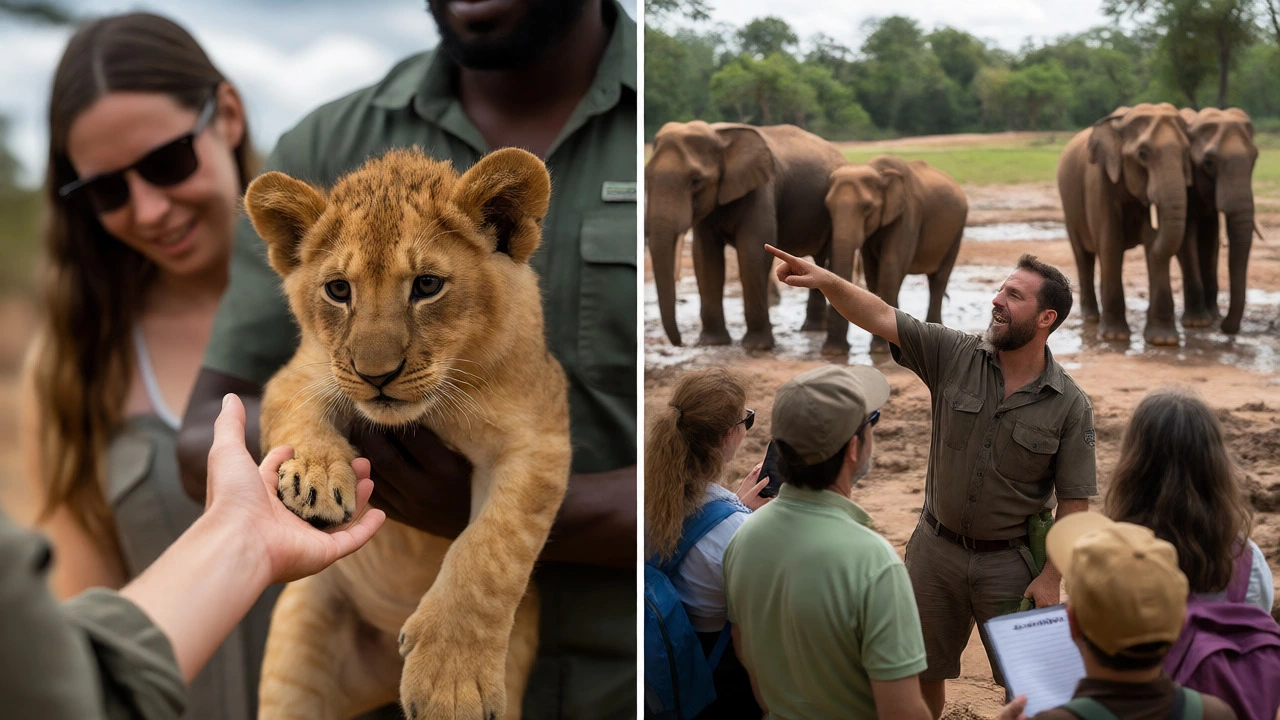
This is usually the biggest deal-breaker for ethical travelers. If a place offers "cub petting," "elephant riding," or "walking with lions," it’s almost certainly exploitative. Why? Because to make a wild animal tolerate human touch, they often undergo brutal training processes involving pain, isolation, and dominance. A true ethical tourism model prohibits direct physical contact between visitors and animals to reduce stress and disease transmission.
Think about it: Would you let a stranger hug you while you’re trying to nap? Probably not. Wild animals feel the same way. Even if the staff claims the contact is "gentle," the sheer volume of tourists means the animal is never truly resting. Exceptions exist for certain veterinary procedures or specific rehabilitation stages, but these are done by trained professionals, not tourists paying for selfies. If you see a queue forming for a photo op, ask yourself: Is the animal enjoying this, or is it enduring it?
Transparency About Origins and Care
Ask questions. A reputable sanctuary will proudly explain where each animal came from. Did they come from a circus? Were they confiscated from illegal traders? Or were they rescued from conflict zones? Bad places often have vague stories like "We found them in the jungle." But here’s the catch: You generally cannot just go into the jungle and capture a baby elephant without killing its mother and family group. So, if a sanctuary buys babies from the wild, that’s a major red flag.
Good sanctuaries are transparent about their intake process. They often partner with government agencies or recognized NGOs. They also provide detailed information about the animals' diets and medical histories. You should see vets on site or visiting regularly. If the staff can’t answer basic questions about an animal’s health or background, be skeptical. Transparency builds trust. If they hide the source of their animals, they likely have something to hide.
Financial Flow: Where Does Your Money Go?
Your entrance fee is a vote. You need to know if that money goes toward feeding, housing, and treating the animals, or if it lines someone’s pocket. Ask how many full-time staff members work there versus how many volunteers or interns. High-quality centers invest heavily in staff training and infrastructure. Look for visible improvements-are they building new enclosures? Are they planting native trees? These are signs of reinvestment.
Be wary of places that rely heavily on souvenir sales or extra fees for every single activity. While some revenue generation is necessary, the core business model shouldn't be squeezing tourists for more cash through constant upsells. Check if the sanctuary is registered as a non-profit or has charitable status. This doesn't guarantee ethics, but it adds a layer of accountability. If possible, look for accreditation from bodies like the Global Federation of Animal Sanctuaries (GFAS) which sets strict standards for animal welfare and management.
Research Before You Book
Don't wait until you're standing at the gate to figure this out. Do your homework. Search online for reviews that specifically mention "ethical" or "exploitation." Look for recent photos on social media-not just the polished marketing shots, but user-generated content. Do the animals look healthy? Are they in clean environments? Check the sanctuary’s website for their mission statement. Does it focus on education and conservation, or does it list "fun activities" as the main draw?
Compare different options using a simple checklist:
| Feature | Ethical Sanctuary | Exploitative Facility |
|---|---|---|
| Animal Interaction | Observation only; no touching | Petting, riding, posing for photos |
| Enclosure Size | Large, naturalistic habitats | Small cages, concrete floors |
| Animal Source | Rescued, confiscated, or born in captivity | Bought from wild or breeding farms |
| Staff Knowledge | Educational guides, vet presence | Focused on selling tickets/photos |
| Behavior | Natural behaviors observed | Sedated, repetitive pacing, aggressive |
Another tip: Look at the ratio of animals to staff. If one keeper is managing twenty elephants, the quality of individual care suffers. Good sanctuaries maintain low ratios to ensure each animal gets attention. Also, check if they accept donations directly. If they push you to buy a $50 t-shirt instead of donating $10 to feed an animal, that’s a clue about their priorities.

The Role of Education
A good sanctuary educates you. It’s not just a backdrop for Instagram; it’s a classroom. Guides should explain why the animals are there, what threats they face in the wild, and how the public can help. If you leave feeling inspired to change your habits-like avoiding palm oil products linked to deforestation-that’s a win. Poor facilities offer little context beyond "Look, a monkey!"
Listen to the tone of the guides. Are they respectful of the animals? Do they discourage loud noises or flash photography? Ethical centers enforce rules strictly to protect the animals' peace. If you see other tourists ignoring rules and staff doing nothing, that’s a bad sign. Enforcement shows respect for the residents.
Trust Your Gut
Sometimes, data fails us. You might read great reviews, but when you arrive, something feels off. Maybe the smell is overwhelming. Maybe the animals seem terrified of humans. Maybe the vibe is chaotic rather than calm. Trust that instinct. If you feel uncomfortable, you probably aren't alone. Leave if you can. Don't spend your entire vacation at a place that makes you feel guilty.
Remember, the goal of visiting a sanctuary is to support the survival of species. By choosing wisely, you encourage better practices globally. When travelers demand ethics, businesses adapt. It’s slow, but it works. Next time you plan a trip, take ten minutes to vet your choices. Your wallet-and the animals-will thank you.
Are all sanctuaries non-profits?
No. Many sanctuaries operate as private businesses. However, even private ones can be ethical if they reinvest profits into animal care and adhere to high welfare standards. Always check their financial transparency and mission statement rather than assuming legal status equals ethics.
Why is elephant riding considered unethical?
Elephants used for riding are typically broken in through a process called "phajaan," which involves torture and isolation to suppress their natural instincts. Additionally, carrying heavy loads on their spines causes long-term physical damage. Modern ethical standards favor observation-only interactions.
Can I visit a sanctuary if the animals are captive-born?
Yes, many animals in sanctuaries are captive-born and cannot survive in the wild. As long as the sanctuary provides a naturalistic environment and does not breed solely for tourism purposes, caring for captive-born animals is a valid form of conservation and welfare.
What certifications should I look for?
Look for accreditation from the Global Federation of Animal Sanctuaries (GFAS) or similar regional bodies. These organizations conduct rigorous audits of animal care, safety, and management practices. Local government licenses are mandatory but do not necessarily indicate ethical treatment.
Is volunteering always good for sanctuaries?
Not always. Unskilled volunteers can sometimes disrupt routines or spread disease. Reputable programs require training, minimum stay durations, and background checks. Avoid "voluntourism" packages that promise hands-on contact with cubs or monkeys, as these often exploit animals for volunteer experiences.