Golden Triangle Trip Cost Calculator
Estimate your total travel costs for a Golden Triangle trip (Delhi, Agra, Jaipur) based on your preferences and travel dates. All prices are in USD.
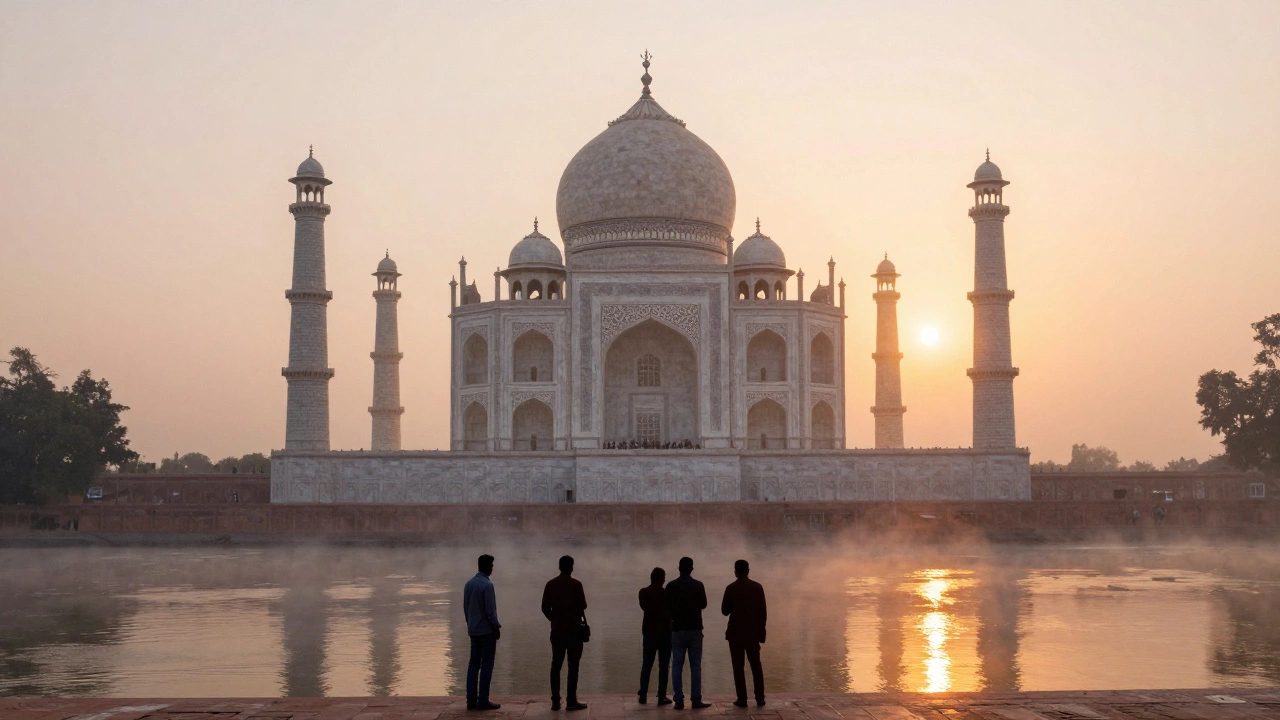
India’s Golden Triangle-Delhi, Agra, and Jaipur-isn’t just a tourist route. It’s a 700-kilometer journey through 500 years of empire, art, and everyday life that still pulses with energy today. If you’ve ever wondered whether this classic itinerary is worth your time, money, and energy, the answer isn’t a simple yes or no. It depends on what you’re looking for. For first-time visitors to India, it’s one of the most efficient ways to see the country’s soul. For seasoned travelers, it might feel too crowded, too polished, too predictable. But here’s the truth: even if you’ve seen the Taj Mahal in a hundred photos, standing in front of it at sunrise changes everything.
What Makes the Golden Triangle Different?
The Golden Triangle isn’t just three cities slapped together on a map. It’s a curated slice of India’s history, architecture, and culture that evolved under the Mughals and Rajputs. Delhi is the political heartbeat-where ancient forts sit beside modern glass towers. Agra is where love turned to stone in the form of the Taj Mahal, built by Emperor Shah Jahan for his wife Mumtaz Mahal after she died giving birth to their 14th child. Jaipur, the Pink City, was planned like a grid of palaces, bazaars, and observatories in 1727, making it one of the earliest examples of urban design in South Asia.
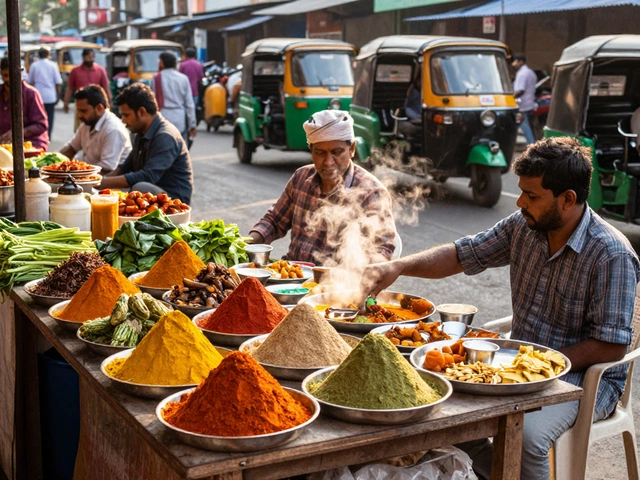
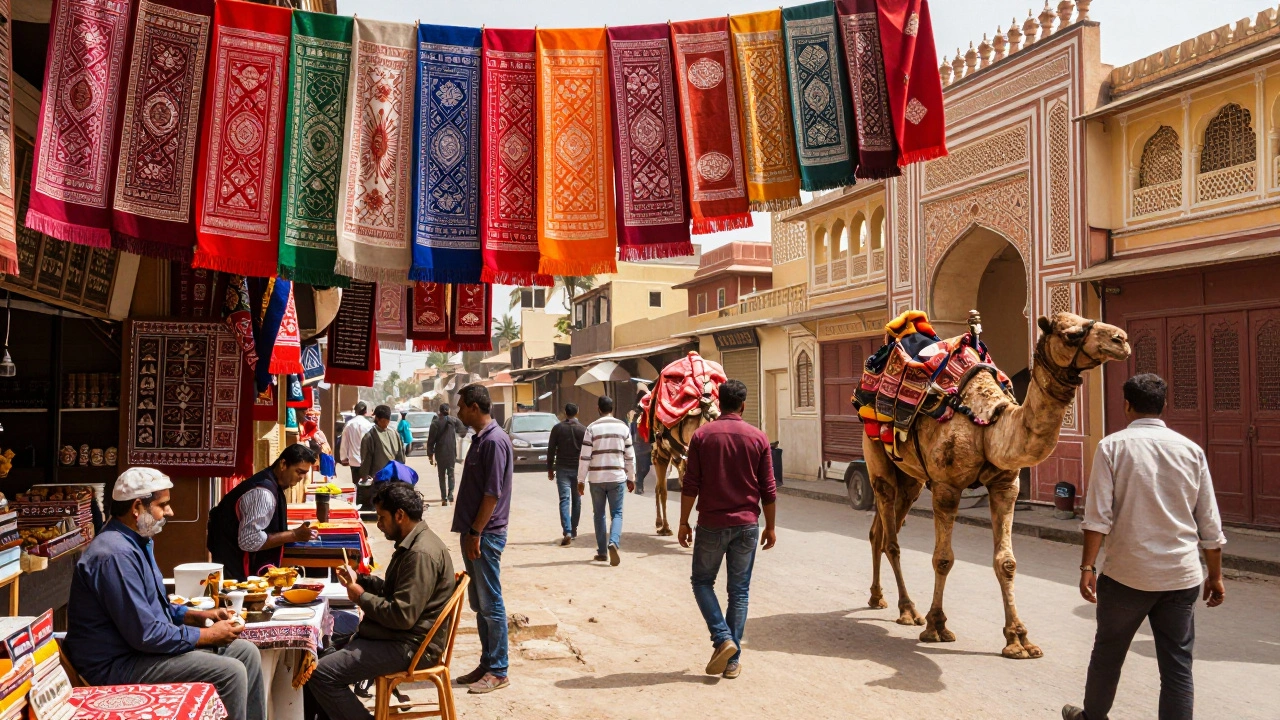
These places aren’t museums. They’re alive. In Delhi’s Chandni Chowk, you’ll push through crowds buying jalebis hotter than the summer sun. In Agra, street vendors sell spiced chai next to the same walls that once echoed with royal court music. In Jaipur, you’ll haggle for block-printed textiles while a camel caravan passes by a 16th-century palace turned luxury hotel. You’re not just seeing history-you’re walking through it.
What You’ll See (And What You Won’t)
Let’s get real: the Golden Triangle is packed with sights. In Delhi, you’ll visit the Red Fort, Qutub Minar, Humayun’s Tomb, and the India Gate. In Agra, the Taj Mahal is the star, but don’t skip Agra Fort-a massive sandstone fortress where emperors lived, plotted, and sometimes died. In Jaipur, the City Palace, Jantar Mantar (an ancient observatory with giant stone instruments), and Amber Fort are must-sees.
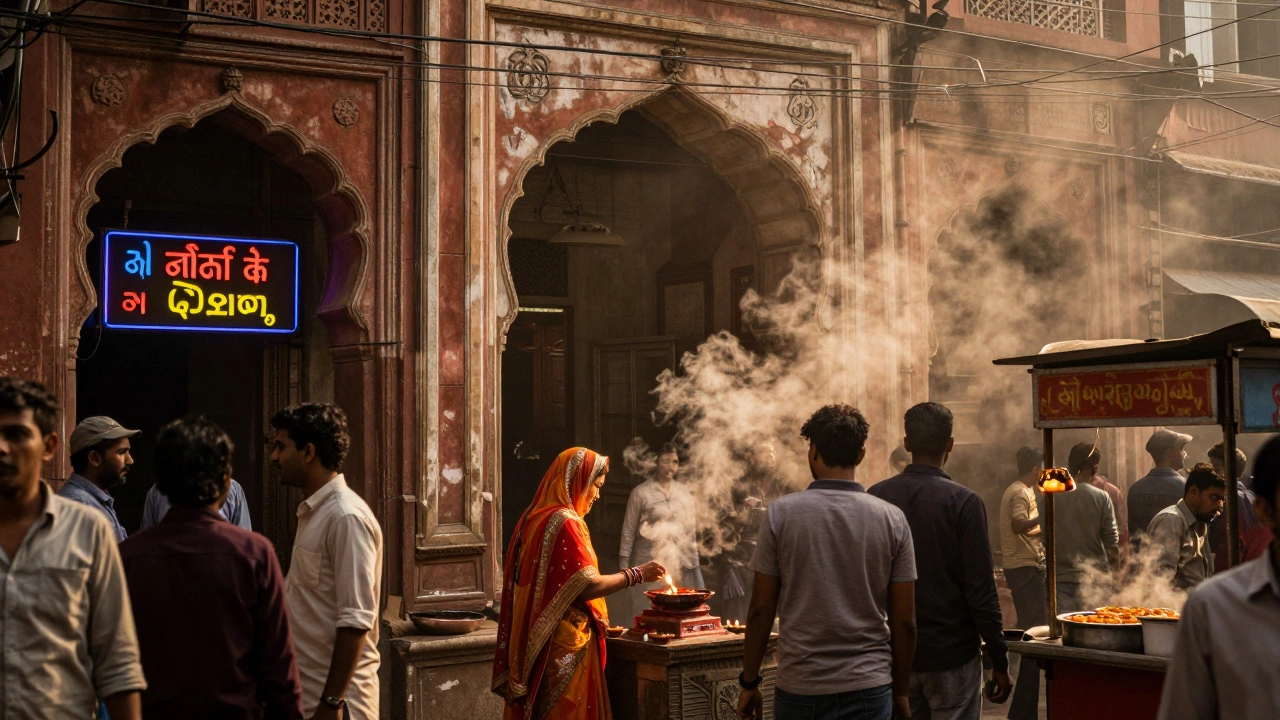
But here’s what most guidebooks leave out: the small moments. The woman in Agra who sells handmade paper lanterns shaped like elephants, her fingers stained with dye. The temple priest in Delhi who lets you light a diya for a rupee and whispers a blessing in Hindi you don’t understand but feel anyway. The chaiwala in Jaipur who remembers your name after three visits because you always ask for extra ginger.
What you won’t find? Silence. Peace. Crowds are unavoidable. The Taj Mahal gets over 8 million visitors a year. Jaipur’s bazaars are loud, dusty, and overwhelming. Delhi’s traffic is a symphony of horns and honks. If you’re looking for a quiet retreat, this isn’t it. But if you want to feel the raw, unfiltered pulse of India-this is the place.
Is It Worth the Cost?
Let’s talk money. A basic 5-day Golden Triangle tour, including accommodation, transport, and entry fees, starts at around $250 USD per person. Luxury options with private guides and five-star hotels can push past $1,000. Flights to Delhi from major global hubs are usually the biggest cost. Once you’re in India, everything else is surprisingly affordable.
Accommodation? You can stay in a clean, central guesthouse for $15-$30 a night. Meals? A full local meal at a roadside stall costs under $2. A private car with a driver for the whole trip? Around $40-$60 a day. Entry to the Taj Mahal is $15 for foreigners. That’s less than a good coffee in Sydney.
Here’s the catch: if you go with a packaged tour, you’ll be rushed. You’ll see the Taj Mahal in 30 minutes, then get shoved into a bus for the next stop. If you go solo, you can linger. Wake up early, be the first one inside the Taj. Watch the light shift from pale pink to gold as the marble glows. Sit on the back wall of the garden and watch families picnic, children run, and old men play chess. That’s the value-not ticking boxes, but breathing in the moment.
Who Should Skip It?
Not everyone should go. If you’ve already spent months traveling through India-hiking in the Himalayas, surfing in Goa, meditating in Rishikesh-you might find the Golden Triangle too touristy. If you hate crowds, noise, or being pushed around, this route will exhaust you. If you’re looking for authenticity in the sense of untouched villages or off-grid experiences, this isn’t it.
Also, if you’re traveling with young kids, the heat, the crowds, and the long drives can be brutal. Agra in June hits 45°C. Jaipur’s streets are paved with stone that radiates heat like an oven. Bring sunscreen, hats, and water. Plan rest days. Don’t try to cram everything into three days.
Who Will Love It?
This route is perfect for first-timers. It’s the easiest way to get a taste of India’s diversity without needing to learn a dozen languages or navigate complex regional transport systems. If you’re short on time-say, 5 to 7 days-this is the most efficient way to see iconic India.
It’s also ideal for couples, photographers, and history lovers. The architecture alone is worth the trip. The Taj Mahal’s symmetry, the intricate marble inlay work in Agra Fort, the mirrored ceilings of Jaipur’s Sheesh Mahal-these aren’t just pretty buildings. They’re feats of engineering and artistry that took decades to build with no modern tools.
And if you’re a foodie? Don’t miss the kebabs in Old Delhi, the dal baati churma in Jaipur, or the petha sweets in Agra. Each city has its own flavor, and each bite tells a story.
How to Do It Right
Here’s how to avoid the pitfalls:
- Start with Delhi-it’s the busiest, so get it out of the way. Stay near Connaught Place for easy access to transport and food.
- Book Agra early-take the 6 a.m. train from Delhi. Arrive before the crowds. The Taj is open from 6 a.m. to 7 p.m., but the best light is before 8 a.m.
- Stay overnight in Agra-it’s cheaper, quieter, and lets you see the Taj at sunset, too.
- Go to Jaipur last-it’s the most relaxed of the three. Spend a day wandering the bazaars, then climb the hill to Amber Fort for sunset.
- Use a private driver-it’s worth the cost. You’ll save time, avoid scams, and get local tips. Pay $50 a day, tip $5 if they’re helpful.
- Don’t buy souvenirs on the first day-prices drop after you’ve haggled for a few hours. Start with a small item to practice.
What to Pack
Don’t overpack. You’ll be moving fast. Here’s the essentials:
- Light, breathable clothes (cover shoulders and knees for temples)
- Comfortable walking shoes (you’ll walk 10-15 km a day)
- Reusable water bottle with filter (tap water isn’t safe)
- Sunscreen, hat, sunglasses
- Small backpack for day trips
- Power bank (outlets are scarce)
- Basic Hindi phrases: “Dhanyavaad” (thank you), “Kitna hai?” (how much?)
Is It Worth It?
Yes-if you go with the right expectations. The Golden Triangle isn’t about escaping the world. It’s about diving into it. You’ll be tired. You’ll be overwhelmed. You’ll get lost in a market, miss your train, and eat something spicy you didn’t expect. But you’ll also stand in front of the Taj Mahal and feel something you can’t explain. You’ll hear a child laugh in Jaipur’s alleyways and realize this place isn’t just a destination. It’s a feeling.
It’s worth it if you want to see how history lives in the present. If you want to understand why India doesn’t just look different-it feels different. If you’re ready for noise, color, chaos, and beauty all at once.
It’s not the whole of India. But for a first visit? It’s the best place to start.
How many days do you need for the Golden Triangle?
You can do it in 4-5 days if you’re rushing, but 6-7 days is ideal. That gives you one full day in each city, plus travel time and breathing room. Most travelers spend two nights in Delhi, one night in Agra, and two nights in Jaipur. Add an extra day if you want to visit Fatehpur Sikri near Agra or push to Ranthambore for wildlife.
Is it safe to travel the Golden Triangle alone?
Yes, solo travelers-especially women-can travel this route safely if they take basic precautions. Stick to well-lit areas at night, avoid isolated spots near monuments, use registered taxis or private drivers, and dress modestly. Many solo travelers report feeling safer here than in some Western cities. Trust your gut, stay aware, and don’t be afraid to say no.
Can you do the Golden Triangle in winter?
October to March is the best time to go. December and January are the coolest months, with daytime temperatures around 20-25°C. It’s perfect for walking, sightseeing, and avoiding the heat. But it’s also peak season, so book everything in advance. Fog can delay trains in December, so give yourself buffer days.
What’s the best way to get between cities?
Trains are the most reliable and affordable option. The Shatabdi Express from Delhi to Agra takes just 2 hours and costs under $15. From Agra to Jaipur, the Intercity Express takes about 3.5 hours. Book tickets through the IRCTC website or a hotel concierge. If you prefer comfort and flexibility, a private car with a driver is ideal-especially if you’re traveling with family or want to stop at roadside stops.
Are there alternatives to the Golden Triangle?
Absolutely. If you want something quieter, try Varanasi and Sarnath for spiritual depth. For nature, head to Ranthambore or Jim Corbett. For culture beyond the Mughals, explore Khajuraho’s temples or the forts of Rajasthan’s lesser-known towns like Jodhpur or Udaipur. But none of these offer the same concentrated mix of history, architecture, and accessibility as the Golden Triangle. It’s the gateway, not the end point.
If you’re planning your first trip to India, start here. You’ll leave with tired feet, a camera full of photos, and a memory you didn’t know you needed.