Ancient India Travel Planner
Select your primary interest to discover which of India's most ancient places is perfect for you.
Spiritual Seeker
I want to experience living history, rituals, and continuous culture.
History & Engineering Buff
I am fascinated by urban planning, water management, and ancient civilizations.
Art & Architecture Lover
I prefer serene environments, stone structures, and intricate carvings.
Anthropology Enthusiast
I want to see the earliest evidence of human life and prehistoric art.
Click an option above to reveal your recommended destination.
India doesn't just have old buildings; it has layers of history that go back tens of thousands of years. If you are looking for the single "most ancient place," you need to decide what counts as a "place." Are we talking about a city where people lived continuously? A temple that still stands? Or an archaeological site where we found the earliest evidence of human life?
The answer changes depending on how you define it. For continuous habitation, Varanasi holds the title. For urban planning and civilization, the Indus Valley sites like Dholavira take the lead. And for pure age of human presence, prehistoric caves like Bhimbetka win by a landslide. Let’s break down these contenders so you can see exactly what makes each one special.
The Continuous City: Varanasi
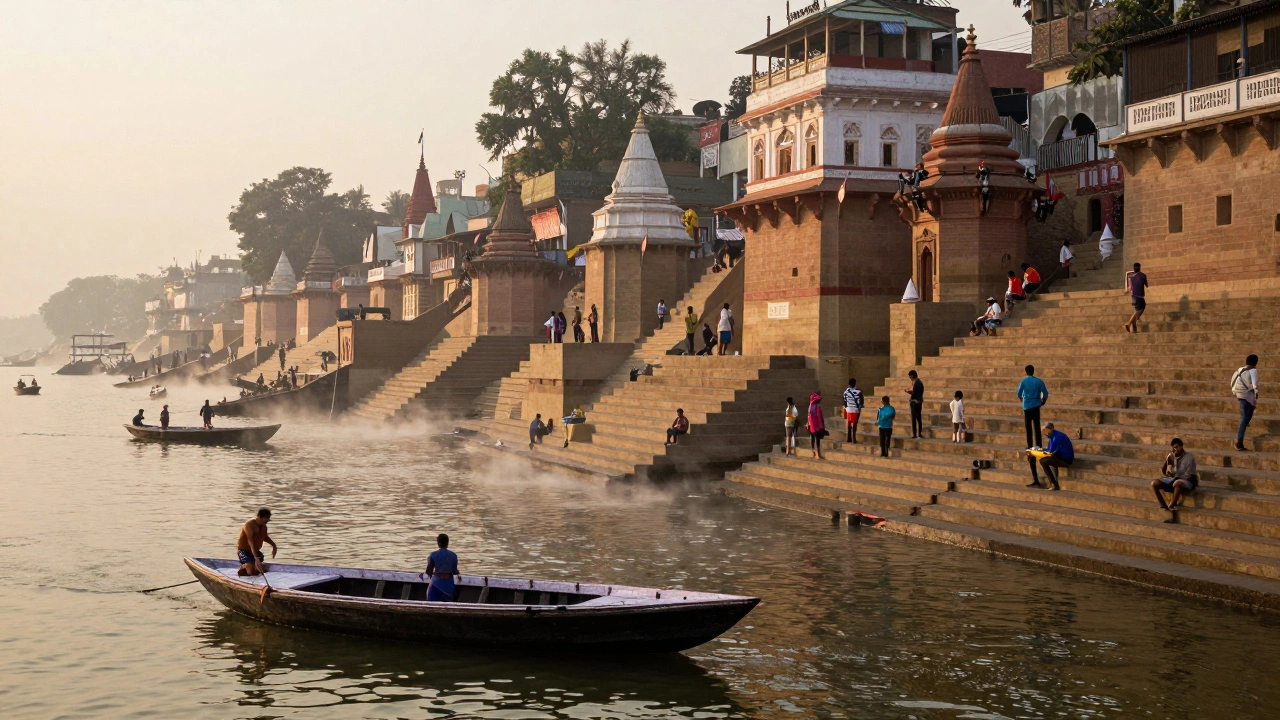
When most historians talk about the oldest living city in the world, they point to Varanasi, also known as Banaras or Kashi. Located in Uttar Pradesh, this city sits on the banks of the Ganges River. It is not just old; it has been inhabited without a major break for over 3,000 years. Some legends even claim it is much older, but archaeologically, we can confirm its existence dating back to at least the 11th century BCE.
Why does Varanasi feel so different from other Indian cities? It’s because the spiritual core hasn’t moved. The ghats (steps leading to the river) have been used for bathing, rituals, and cremations for millennia. Walking through the narrow alleys near the Kashi Vishwanath Temple, you are walking on streets that were likely laid out during the Vedic period. You aren’t just visiting a tourist spot; you are stepping into a timeline that connects directly to ancient Hindu philosophy.
If you want to experience the "ancient" vibe, don’t just look at the temples. Watch the morning Ganga Aarti at Dashashwamedh Ghat. The chants, the fire, and the rhythm of the crowd have remained largely unchanged for centuries. This continuity is what makes Varanasi unique-it’s a living museum rather than a preserved relic.
The Urban Pioneers: Indus Valley Civilization Sites
If you prefer planned cities with advanced engineering, you need to look west to Gujarat and Rajasthan. The Indus Valley Civilization flourished between 2600 BCE and 1900 BCE. While Mohenjo-Daro and Harappa are famous, two other sites offer a deeper dive into this ancient era.
Dholavira in Gujarat is a standout. Discovered in 1967, this site shows incredible water management systems. The builders created reservoirs to store rainwater, which was crucial for survival in the arid Rann of Kutch region. In 2021, UNESCO added Dholavira to its World Heritage List, recognizing its unique layout and the giant signboard made of shell fragments found there. This suggests a form of writing or symbolic communication that we are still trying to decode.
Then there is Rakhigarhi in Haryana. Recent excavations have revealed that Rakhigarhi might be the largest site of the Indus Valley Civilization, covering more area than Mohenjo-Daro. Archaeologists have found skeletons here that date back over 4,500 years. DNA analysis from these remains provides direct links to the ancestors of modern South Asians. Visiting Rakhigarhi feels like standing on a blank canvas, but the artifacts found there tell a story of trade, craftsmanship, and social organization that rivals any contemporary civilization in Egypt or Mesopotamia.
| Site Name | Approximate Age | Key Feature | Location |
|---|---|---|---|
| Bhimbetka Rock Shelters | 30,000+ years | Paleolithic cave paintings | Madhya Pradesh |
| Dholavira | 2600 BCE | Water management & urban planning | Gujarat |
| Sanchi Stupa | 3rd Century BCE | Oldest stone structure in India | Madhya Pradesh |
| Varanasi | 11th Century BCE+ | Continuous habitation | Uttar Pradesh |
The Stone Witness: Sanchi Stupa
While cities rise and fall, stone structures endure. The Sanchi Stupa in Madhya Pradesh is often cited as the oldest stone structure in India. Built in the 3rd century BCE by Emperor Ashoka, this Buddhist monument marks the spot where Buddha’s relics were buried. But here’s the interesting part: Ashoka didn’t build it from scratch. He expanded an existing hemispherical brick stupa built by Buddha’s disciples.
What makes Sanchi so valuable isn’t just its age; it’s the detail. The four gateways (toranas) are carved with scenes from Buddha’s life, Jataka tales (stories of his previous births), and daily life in ancient India. These carvings serve as a visual encyclopedia of the period. They show us what people wore, how they traded, and what animals roamed the land. Unlike Varanasi, which is a living city, Sanchi is a frozen moment in time, perfectly preserved under the care of the Archaeological Survey of India.
The Prehistoric Canvas: Bhimbetka
If you want to go back further than cities or stupas, you need to head to the Vindhya Range in Madhya Pradesh. Bhimbetka consists of over 700 rock shelters. Inside these caves, you will find paintings that date back to the Paleolithic era-more than 30,000 years ago. Yes, thirty thousand. That predates the pyramids of Egypt by roughly 28,000 years.
These aren’t just random scribbles. The paintings depict hunting scenes, dances, and tribal life. The colors used-ochre red, yellow, and white-are still vibrant after millennia. How did they survive? The limestone rocks protected them from weathering, and the natural pigments bonded with the stone surface. Walking through Bhimbetka, you realize that human creativity is as old as human society itself. These early inhabitants weren’t just surviving; they were expressing themselves, telling stories, and recording their world long before written language existed.
Which One Should You Visit?
Choosing the "most ancient" place depends on what kind of traveler you are. Each site offers a completely different experience.
- For Spiritual Seekers: Go to Varanasi. The energy of the ghats and the sheer weight of continuous religious practice is unmatched. You’ll feel the pulse of ancient India beating in the present day.
- For History Buffs & Engineers: Dholavira is your best bet. The scale of the water conservation system is mind-blowing. It shows how ancient Indians adapted to harsh environments with smart technology.
- For Art & Architecture Lovers: Sanchi Stupa is essential. The intricate carvings provide a window into the artistic sensibilities of the Mauryan and Shunga periods. It’s quiet, serene, and deeply educational.
- For Anthropology Enthusiasts: Bhimbetka is non-negotiable. Seeing art that is 30,000 years old puts modern problems into perspective. It reminds you of our shared human roots.
Practical Tips for Visiting Ancient Sites
Visiting these places requires some preparation. Many are located in remote areas with limited infrastructure. Here is how to make the most of your trip.
- Timing Matters: Avoid the peak summer months (April-June) if possible. Temperatures in Gujarat and Madhya Pradesh can exceed 45°C (113°F). The best time to visit is between October and March when the weather is cool and pleasant.
- Hire Local Guides: At sites like Rakhigarhi or Bhimbetka, a guide isn’t just helpful; they’re necessary. Without context, you’re just looking at rocks or mounds. A knowledgeable guide can explain the significance of specific artifacts and bring the history to life.
- Respect Local Customs: In Varanasi, dress modestly. Cover your shoulders and knees when entering temples. Remove your shoes before entering sacred spaces. In Buddhist sites like Sanchi, maintain silence and respect the meditative atmosphere.
- Preservation First: Do not touch the cave paintings at Bhimbetka. The oils from your skin can damage the pigments over time. Follow all signage and barriers set up by the Archaeological Survey of India.
India’s ancient past is not a monolith. It’s a diverse tapestry woven from many threads. Whether you are standing by the Ganges in Varanasi, exploring the water tanks of Dholavira, or gazing at prehistoric art in Bhimbetka, you are connecting with a lineage that stretches back to the dawn of human consciousness. These sites are not just tourist attractions; they are anchors to our collective memory.
Is Varanasi really the oldest city in the world?
Varanasi is widely considered the oldest *continuously inhabited* city in the world. While other cities like Damascus or Jericho may have older origins, they have experienced periods of abandonment or destruction. Varanasi has had a continuous population and religious significance for over 3,000 years, making it unique in its unbroken timeline.
How old are the cave paintings in Bhimbetka?
The oldest paintings in Bhimbetka date back to the Paleolithic era, approximately 30,000 years ago. However, the site contains paintings from various periods, including the Mesolithic and Neolithic eras, showing a continuous use of the shelters for over 20,000 years.
Can tourists visit Rakhigarhi?
Yes, Rakhigarhi is open to tourists, but facilities are basic compared to major tourist hubs. It is located in Haryana, about 150 km from Delhi. Visitors should expect a rural setting with limited amenities. Hiring a local guide is highly recommended to understand the archaeological significance of the site.
What is the significance of the Sanchi Stupa?
Sanchi Stupa is significant because it is the oldest stone structure in India, commissioned by Emperor Ashoka in the 3rd century BCE. It houses relics of Buddha and serves as a major pilgrimage site for Buddhists. Its gateways feature detailed carvings that provide insights into ancient Indian art, culture, and Buddhist narratives.
Why is Dholavira important to the Indus Valley Civilization?
Dholavira is crucial because it showcases advanced urban planning and water management techniques. Unlike other Indus sites, it was built in a desert environment, requiring innovative solutions for water storage. The discovery of a large signboard with undeciphered symbols also suggests a complex communication system, adding depth to our understanding of this ancient civilization.