South India Budget Calculator (2026)
Estimated Costs
Comfortable TravelerDaily Breakdown
- Accommodation $70
- Food & Drink $15
- Transport $10
- Extras $10
- Daily Total $105
Estimated Trip Total
$735
For a 7-day trip
You’ve probably seen the headlines. "India is one of the cheapest countries in the world." "You can live like a king for $30 a day." It sounds tempting, especially if you are planning a trip from Australia or Europe. But here is the truth: India is not uniformly cheap. It is a place where prices swing wildly depending on exactly where you stand, what you eat, and how you move.
If you walk into a five-star hotel in Mumbai, your credit card will cry. If you sleep in a dorm in Kerala, you might pay less than you would for a cup of coffee in Sydney. The real question isn't whether India is cheap. The question is: cheap for whom, and where? Let’s break down the actual costs of visiting India in 2026, focusing heavily on the south, where the vibe is relaxed and the value is often higher.
The Myth of the "Flat Rate" Price
Many travelers arrive with a fixed budget in mind, expecting every transaction to follow a single rule. That rule usually breaks within the first hour at the airport taxi stand. India operates on a dual-economy system. There is the local price, and there is the tourist price. Your job as a traveler is to navigate the gap between them.
In major hubs like Delhi, Mumbai, and Bangalore, costs approach Western levels for certain services. International flights, branded electronics, and upscale dining are priced globally. However, labor-intensive services-like massage, cooking, driving, and manual construction-remain incredibly affordable because they rely on local wages. This creates a unique dynamic: staying in luxury accommodation might cost you $150 a night, but hiring a private driver for the day could cost you just $40.
To understand the real cost, we need to look at the three main pillars of spending: Accommodation, Food, and Transport. These vary drastically between North and South India. While the Taj Mahal in the north draws millions, the backwaters of Kerala and the temples of Tamil Nadu offer a different kind of value proposition.
Accommodation: Dorms vs. Palaces
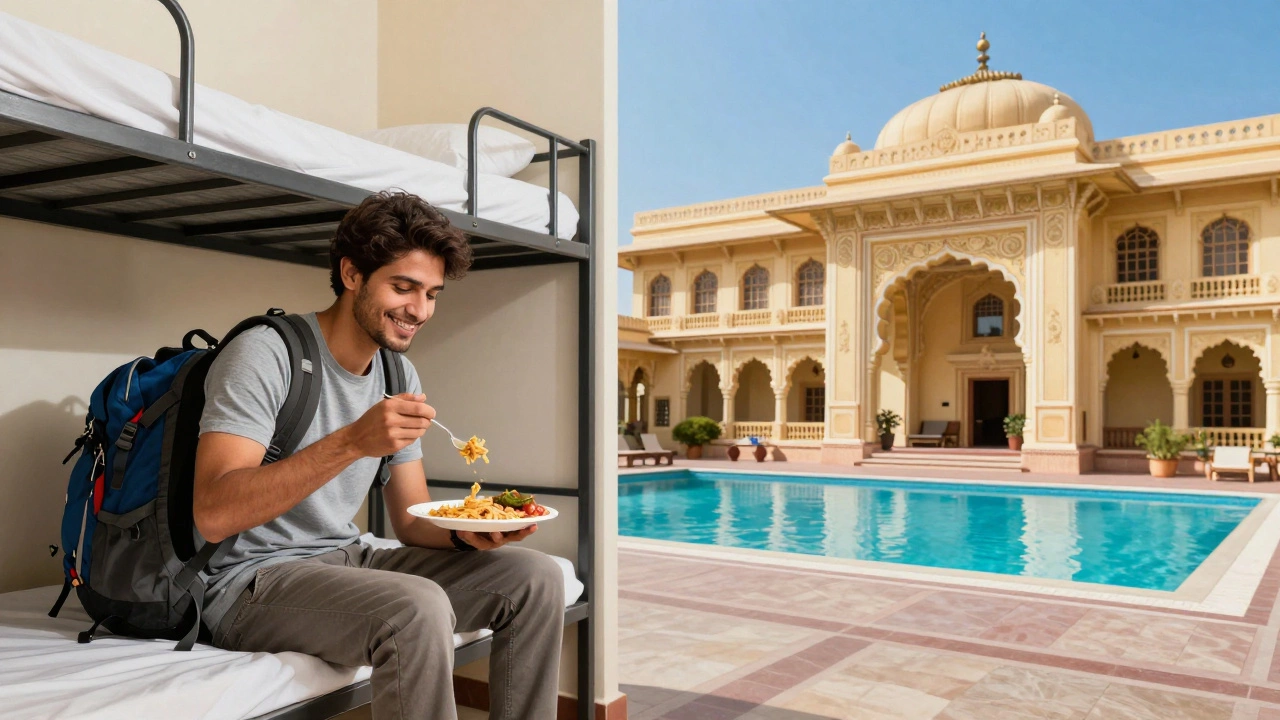
Where you sleep is the biggest variable in your budget. In India, you have options that range from street-side hostels to heritage palaces that were once royal residences.
| Type | Price Range (USD) | What You Get |
|---|---|---|
| Hostel Bed | $8 - $15 | Shared room, AC, lockers, social atmosphere |
| Budget Hotel / Guesthouse | $20 - $40 | Private room, clean bathroom, basic breakfast |
| Mid-Range Boutique | $50 - $90 | Character, pool, good location, included meals |
| Luxury Resort / Palace | $150 - $400+ | World-class service, spa, fine dining, exclusivity |
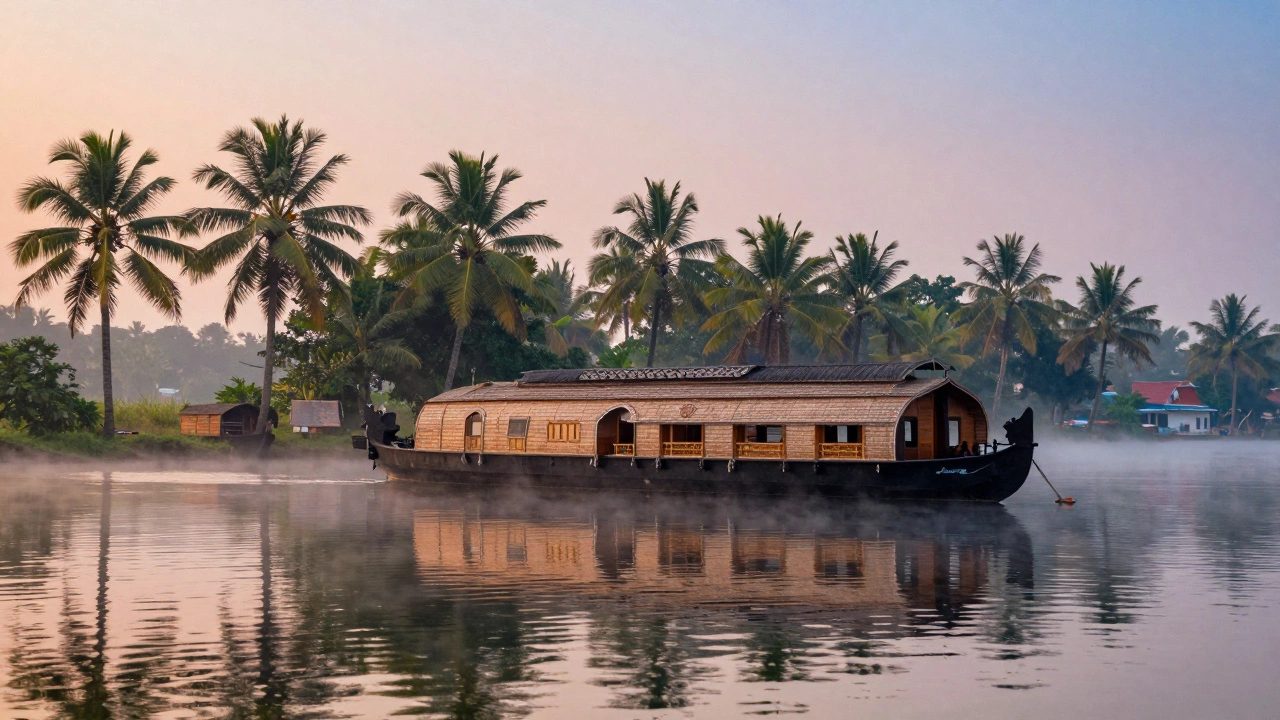
In places like Kochi or Alleppey in Kerala, you can find excellent mid-range stays for under $50. In contrast, trying to find similar quality in peak-season Goa or New Delhi might push that number to $80 or more. The key insight here is that South India offers better value for mid-range travelers. You get more space, better food, and often a pool for the same price you’d pay for a cramped room in the north.
Eating Like a Local vs. Eating Like a Tourist
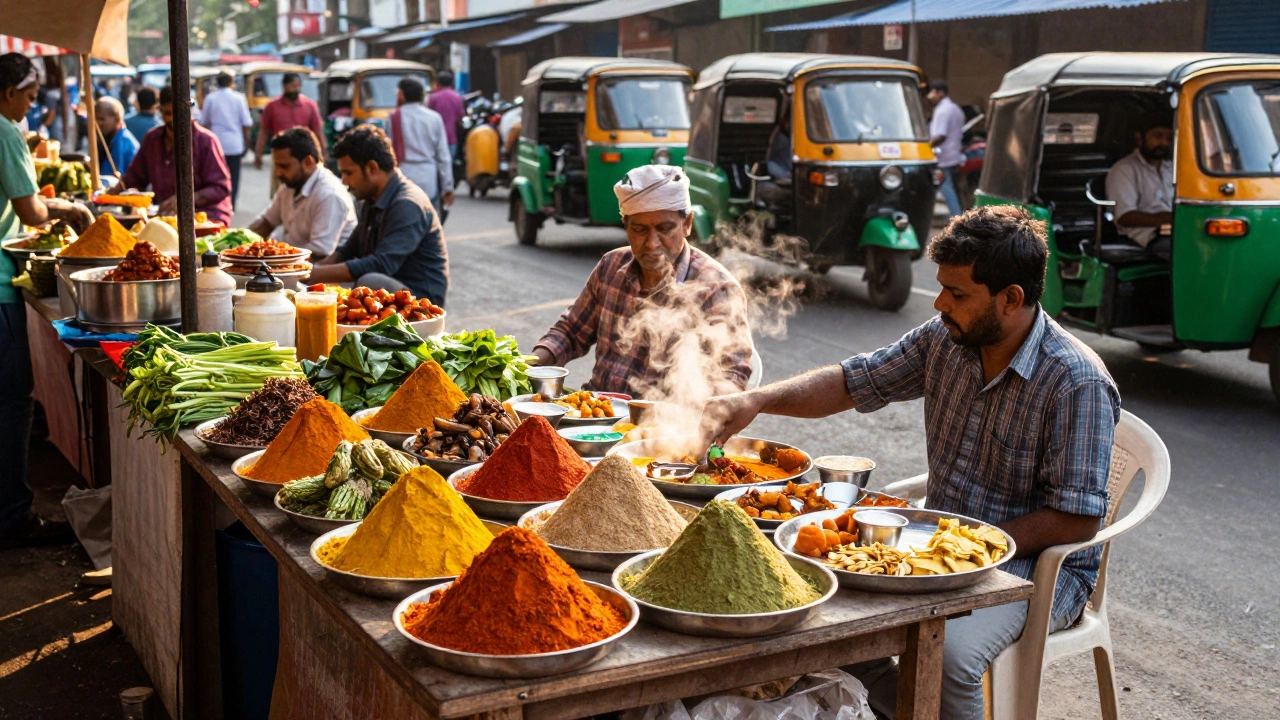
Food is where India shines brightest for budget travelers. If you eat at street stalls or local thali restaurants, you can spend less than $5 a day. A full meal with rice, dal, vegetables, and curd might cost you ₹100 (about $1.20). It is fresh, spicy, and delicious.
However, the moment you step into an air-conditioned restaurant with English menus and international brands, prices jump. A simple pasta dish in a cafe in Bangalore or Chennai can cost $10-$15. Alcohol is another trap. Beer and wine are heavily taxed in India. A bottle of decent wine in a hotel bar can easily set you back $20-$30. If you enjoy drinking, factor this into your budget early. It is not "cheap" alcohol.
Tip for saving money: Eat where the locals eat. Look for plastic chairs outside shops, lines of office workers, and signs written only in local languages. Avoid places with pictures of food on the menu-that is usually a sign it is geared toward tourists who don’t know what to order.
Transportation: Trains, Buses, and Flights
Getting around India is surprisingly affordable if you plan ahead. The Indian Railways network is massive. For short distances (under 200km), state-run buses are the cheapest option, often costing less than $2 for a journey that takes two hours. They are crowded, hot, and chaotic, but they work.
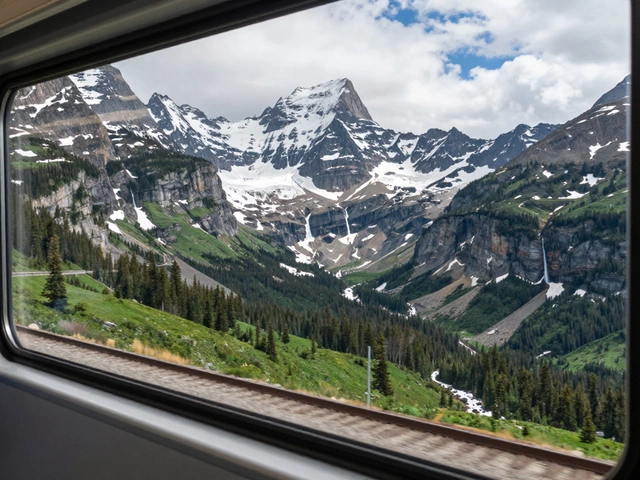
For longer distances, trains are king. An AC sleeper ticket from Bangalore to Mysore might cost $15. From Chennai to Madurai, perhaps $20. If you book online via IRCTC (the official railway portal) or apps like MakeMyTrip, you avoid touts and get confirmed seats. Just remember: booking popular routes requires timing. Tickets open 120 days in advance and sell out fast during holidays.
Domestic flights are getting cheaper due to competition, but baggage fees have increased. A flight from Hyderabad to Kochi might be $40 one way, but adding checked luggage pushes it to $70. Compare this to a 6-hour train ride for $25. The train is slower, but it saves you money and gives you a view of the countryside that planes miss.
Why South India Offers Better Value
While North India has iconic monuments, South India often provides a richer experience for less money. Here is why:
- Climate: South India is generally hotter and more humid, which means fewer crowds in many areas compared to the shoulder seasons in the north. You can visit Kerala or Tamil Nadu in months when Rajasthan is unbearably hot, finding lower prices on hotels.
- Cuisine Cost: Rice-based diets are staple and inexpensive. Street food in cities like Chennai and Coimbatore is abundant, hygienic (by local standards), and very cheap.
- Homestays: The culture of hospitality in the south encourages homestays. You can stay with a family in a village in Kerala or Karnataka for $20-$30 a day, including all three meals. This immersion is rare in other parts of India and offers incredible value.
Consider the temple towns of Tamil Nadu. Places like Madurai, Tiruchirappalli, and Thanjavur have rich history, stunning architecture, and very low living costs. A night in a decent guesthouse near Meenakshi Temple in Madurai might cost $15. Breakfast is free or $1. Lunch is $2. You are experiencing world-class heritage without the premium price tag of Varanasi or Jaipur.
Hidden Costs That Bite Hard
Even in a cheap country, hidden costs can derail your budget. Be aware of these:
- Tipping Culture: Tipping is expected in hotels, restaurants, and for guides. 10% is standard in sit-down restaurants. Drivers expect ₹100-200 per day. Housekeeping expects ₹50-100 per night. It adds up.
- Water Bottles: Tap water is not safe to drink. You will buy bottled water constantly. At ₹20-30 ($0.25-$0.40) per bottle, this seems small, but over a week, it’s significant. Buy large 20-liter cans for your accommodation to refill reusable bottles.
- Guide Fees: Official government guides charge by the hour or site. At major sites like Hampi or Khajuraho, expect to pay ₹500-1000 ($6-$12) for a few hours. Unofficial guides will hound you; learning to say "No, thank you" firmly is essential.
- Entrance Fees: Foreigners pay significantly higher entrance fees at historical sites than Indians. At the Red Fort or Amber Fort, foreigners might pay $15 while locals pay $1. Check if you qualify for any concessions (students, seniors).
Sample Daily Budgets for South India
Let’s put numbers to this. Here are three realistic daily budgets for a solo traveler in South India in 2026.
The Backpacker ($25 - $35/day)
- Hostel bed: $10
- Street food/local meals: $8
- Local bus/train: $3
- Water/snacks/entry fees: $5
- Buffer: $5
The Comfortable Traveler ($60 - $90/day)
- Mid-range hotel: $40
- Restaurant meals + some street food: $15
- Auto-rickshaws/taxis: $10
- Activities/guides: $10
- Drinks/snacks: $5
The Luxury Seeker ($150+/day)
- Heritage resort/luxury hotel: $100+
- Fine dining: $30
- Private car with driver: $40
- Spa/wellness activities: $20+
As you can see, India accommodates all styles. But the "cheap" label applies most accurately to the backpacker and comfortable traveler categories. Even the luxury category is often cheaper than equivalent experiences in Thailand or Bali.
How to Keep Costs Down Without Sacrificing Experience
Traveling cheaply doesn’t mean suffering. It means being smart. First, use UPI (Unified Payments Interface) if you can link it, or carry cash. Many small vendors do not accept cards, and ATMs charge withdrawal fees. Withdraw larger amounts less frequently to save on fees.
Second, negotiate politely but firmly. In markets and for auto-rickshaws, always agree on the price before starting. Use apps like Ola or Uber in cities to avoid negotiation entirely-they show fixed rates.
Third, travel during the shoulder season. In South India, October to February is peak weather-wise, but also peak price-wise. March to May is hot, but hotels drop prices by 30-40%. If you can handle the heat, you save serious money.
Is India really cheaper than Southeast Asia?
Generally, yes. For accommodation and food, India is often 20-30% cheaper than Thailand or Vietnam. However, transport and alcohol can be more expensive. Overall, your daily budget will stretch further in India if you stick to local experiences.
Do I need to bring cash from home?
It is better to withdraw Indian Rupees (INR) from ATMs upon arrival. Credit cards are widely accepted in cities, but rural areas and small shops require cash. Avoid exchanging money at airports due to poor rates.
Which part of India is the most expensive?
Goa, Ladakh, and major metros like Mumbai and Delhi are the most expensive. Goa, in particular, has inflated prices due to its popularity among international tourists. South India, excluding coastal resort areas, tends to be more affordable.
Is it safe to eat street food on a budget?
Yes, if you choose wisely. Stick to busy stalls with high turnover, ensuring food is cooked fresh and hot. Avoid raw salads and ice in drinks. Street food is a huge part of the Indian experience and very cheap.
Can I travel India on $20 a day?
It is possible but tight. You would need to stay in hostels, eat only street food, use public buses, and limit paid attractions. For a more comfortable experience with occasional taxis and nice meals, aim for at least $40-$50 a day.